

252 | What Really Sells Clients on Hiring You?
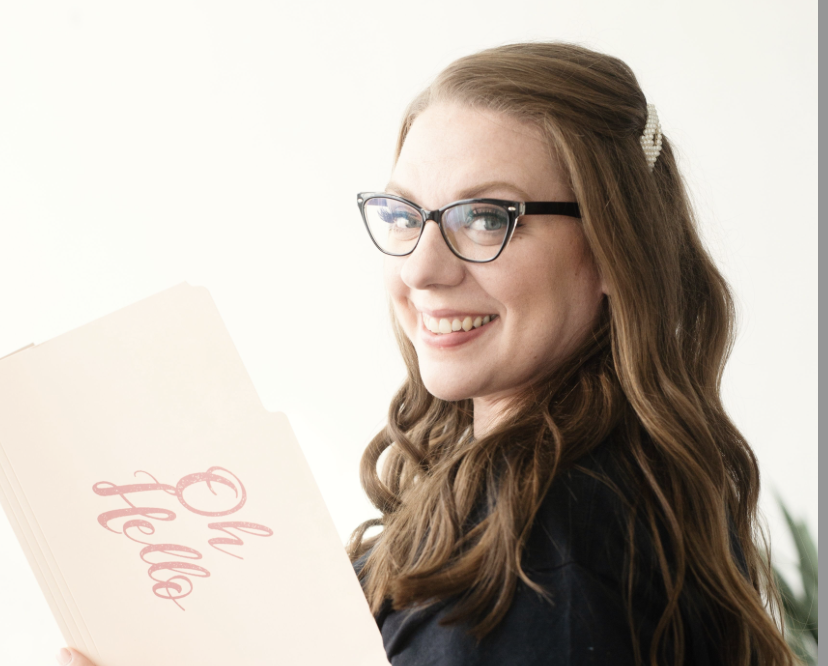
Sarah is here to remind us that…
Whatever it is, the way you tell your story can make all the difference.
Do clients really want the “perfect” organizer?
(Or are they ACTUALY looking for something you might not expect them to??)
In this episode, I'm joined by my friend, organizer and Inspired Organizer mentor Sarah Brent of Practical Harmony in Illinois. We are getting vulnerable and honest about why showing your personality may be the most powerful marketing tool in your organizing business.
We really, truly get the pressure organizers feel to look polished, perfect, and put-together—but we're breaking down why the (overused buzzword!) authenticity is what actually attracts the right clients.
Sarah shares how her own story, including growing up around hoarding and disorganization, became one of her greatest strengths as an organizer.
Being yourself can set you apart in a crowded industry!!!
In this episode, we discuss:
Why clients hire people, not just services
How your personal story can become your biggest differentiator
The myth of the “perfect” professional organizer
Why vulnerability builds trust with potential clients
How to stop comparing yourself to other organizers online
Why you do not need to be everything to everyone
How authenticity helps you attract better-fit clients
Building a business that reflects who you are
If you’ve ever felt like you don’t fit the mold of what an organizer “should” be, this episode is your reminder: that may be exactly what makes you successful.
You can listen right here by pressing play, or you can read the full transcript below!
LINKS FOR LISTENERS
Connect with Melissa and Pro Organizer Studio: CLICK HERE
If you are interested in our Inspired Organizer® program, you can find us at www.inspiredorganizer.com
We have a whole library of podcasts here, our YouTube channel, and you can find us on Facebook and Instagram at Pro Organizer Studio.
FULL TRANSCRIPT
Hey Pro Organizers, it’s Melissa, and I have my friend Sarah here today. Sarah is an organizer in Illinois. She’s been on the podcast many times. She is one of our mentors in our Inspired Organizer group, and she has something that she has talked about a lot that I think is important for organizers to hear again.
I am bringing this out today to share with you in case you need a reminder that, in a world where so many people are trying to be the same, and we are seeing things online and other places that just want us all to be kind of conformative, I want you to run your own business, and I want you to show what your personality is. Because your personality—I will die on this hill. I have several things that I will die on the hill for, and this is one of them.
Showing your personality and showcasing who you are is the most important thing that you can do in your organizing business. This is about you. It’s about the team, if you’re a team leader—the team you have built, showing your personality, your team’s personality, who you are, talking about what you believe in in terms of organizing is so important.
And Sarah talks so eloquently about this, I just want her to tell you her story and why it’s important. I hope you guys are having a great week, and I’ll be back later this week with some fun stuff. Have a great day.
Melissa Klug: You made a post on our private coaching group, and I’m just going to read it because I think it’s really important. And then I want to talk about it.
So, you said:
Clients need to hear about you and your uniqueness. They need to hear your story, why you do what you do, why you’re different from other organizers. Not everybody wants to hire the type-A minimalist organizer who’s been organizing since they were in diapers. A lot of clients are looking for organizers who have had firsthand experience with hoarding, chronic disorganization, downsizing, relocating, therapy, recovery, blending families, aging parents, losing loved ones, being diagnosed late in life with ADHD or autism, even something like rebuilding after a fire or designing your own kitchen or closets.
This is what makes you unique and knowledgeable. Share with others what you have gone through, what you’ve learned along the way, and find ways to set yourself apart from the rest of the pack. Professional organizers are personal trainers for your home and closet. I, for one, would look for a personal trainer who’s like me and has overcome some of the same struggles, so I know they know how to help me where I am.
But it doesn’t just have to be struggles. People want to know what your interests and hobbies are, what your goals in life are, what you studied in school, even if it doesn’t feel relevant to organizing. They really want to know who you are. They want to connect with you in some way before they invite you into their home.
And this is a good one—the biggest takeaway: If you love to organize garages and dirty spaces, then get out there and advertise that, because so many organizers say they hate organizing garages, and it’s a massive market that needs to be taken care of.
So, I just loved this entire thing, and I want to talk to you about it.
Sarah Brent: It wasn’t a rant at all.
Melissa Klug: So tell me a little bit about what inspired it. What made you go, “I gotta put this out here”? Because I agree with every word you said. Yep.
Sarah Brent: As an organizer, there have to be so many people out there who want to hire us, but are just like, “I don’t want the ladies from The Home Edit. I don’t want Marie Kondo. I don’t want somebody who’s just going to come in and boss me around and tell me you have to get rid of everything if you want to be happy.”
And then I was just also thinking about my own story and why I became an organizer. And I’m just like, well, hell, that’s not even why I became an organizer. And I have just felt myself—I’ve been organizing for a little over nine years—and I’ve kind of always felt like I was the odd person out, not like everybody else, because everybody always connected on that, “Oh my God, I’ve been organizing since I was a little kid and putting my blocks in a row.”
And I’m just like, yeah, my room was a complete disaster. I have not been organizing since I was a kid. It took me until I was in my twenties until I really realized, like, “Oh, if I want to be happy in my house, I’ve got to start organizing crap.” I was 42. So there it is.
And it’s like, there are so many similarities that I do have with a lot of these ladies and organizers, but there are just some big things that stand out. And I was just like, I feel like I do attract the clients that I want—clients that are more laid back and don’t want me to come in and just tell you, “This is how you’re going to live in your house,” because that’s just not how I work.
I want to be more friendly and approachable, and we’re building up a relationship as we’re working through everything in your house. And I just kept thinking, we aren’t talking about this enough, because I feel like it is just expected of us to be type A. It’s expected of us to always have an organized home and always be super amazing organized people.
I just was like, I need to start talking about that more. I have in the past, I’ve shared a little bit of my story with my audience, but especially with Instagram, it’s really hard when you start comparing yourself to everybody else. And you’re just like, “Well, dang, is there nobody out there like me?”
And then you’ve got to think, well, clients are thinking the same thing. “Well, dang, there’s not an organizer out there like me. I don’t want a perfect person. I want somebody who was broken and figured it out and now they’re helping other broken people.”
It’s just, Sarah, you’ve got to stop being so quiet. You feel left out because you’re kind of allowing just the type-A personalities to take control of what people think organizers are. And I know there are so many people out there who aren’t like that.
What if we all just started speaking up more and being like, “I’m different. This is how I’m different.” I think that it’s going to attract the ideal client for you, and you’re not going to be stuck with clients that just aren’t your vibe.
So yeah, I just kept thinking, you’ve got to tell your story. You’ve got to talk about you and either how you got here or, like I said, what your interests are—just anything. Because people aren’t wanting to just bring strangers into their homes to go through all their stuff. So even if you don’t have so many connections with them, even if you don’t all live the same way, they’ll still be like, “Oh wow, you’re a real person. You told me your story. You’re vulnerable.”
We want them to be so vulnerable with us, but sometimes we put up these facades, and we’re just like—we’ve got to be vulnerable with them too, to show them that we’re real people. And especially, we know what you’re going through, if that’s something that you’ve experienced.
Melissa Klug: You’ve said so many things there that I want to get into. But the hot take I have is, I suspect that most people are also feeling like you are. “Well, I’m not perfect, and I’m not this…” You know, I might have some of these characteristics, right? But I’m not all of these.
I think everybody’s probably feeling that way, but everybody feels like, “Well, I can’t. I have to project an image.” So I think we have this concept that we have to project this image, and it’s because of social media that we feel that way.
But I would guarantee that the people on that stage are also dealing with all these things too, but they have created something where they have to project an image: “I’m a professional organizer.” And none of us are perfect, right?
And so I think being vulnerable and telling people, “I’m also not perfect,” because one of the top questions I get from people is, “Oh, so your house is perfect?”
No, my house isn’t perfect. You want to know why? People live there.
Sarah Brent: Yeah, yeah, yeah.
Melissa Klug: My only thing to you is, I think lots of people probably felt the same way you did. That we’re not all one-size-fits-all. We’re not all organized since birth. And even people who have been organized since birth, I would argue they have a story too.
So we all have got to be better about showing that we are not all the same person—and differentiate yourself.
Sarah Brent: That’s something I was thinking too. Even if you have always been an organized kid, or the job naturally came to you, there is still more to the story. Why do you want to do that? Why do you want to help people?
A lot of clients also love to know that our brains are just different than theirs. It kind of gives them like, “Okay, so I’m not just a broken person.” It’s like, no, actually, you’re not broken. We’re usually the weird ones. We’re the ones that like to go into strangers’ homes and put things in order for them.
So it’s like, there’s always a story. And definitely social media plays such a big thing into this because we just sit there, we see everybody’s highlight reels, we see everybody’s perfect spaces, and then we’re just like, “Dang, I’m not like that.”
But like you said, just kind of showing your Monica closet, things like that. Something I have been meaning to talk about more on my social media is that I finally, a couple years ago, broke down and hired a house cleaner. And I was so ashamed of that forever. I did not do it for the longest time because I was just like, “What are people going to think of me?”
But then it just came down to it—honestly, it was for my mental health. Because I had no time, and I had no energy, and no interest in cleaning those spaces. And also, what’s wrong with that? If I’m asking other people to bring me into their house for help, what’s wrong with me saying, “I also need help. I’m not perfect.”
And look at my house—it’s all clean now.
Melissa Klug: And if we are asking people to pay us a lot of money to come into their house and fix their problems, we have to be willing to say, “I also need some help.” And guess what? I’m not a house cleaner. In fact, I’m very poor at that. So I would like to find someone who’s really good at it.
It’s like my client yesterday—we were in her basement, and she had made it sound like some sort of massive explosion had gone off and it was the worst nightmare she’d ever seen in her entire life. And I go downstairs and in my head I’m like, “Oh, this will take me like three hours, whatever.” And I was like, nope, we’ve got this handled. It’s really no problem.
She goes, “I don’t understand how you can see a path out of this.” And I’m like, but that’s my job.
In the same way, a house cleaner—I don’t understand how house cleaners know what they need to do, but they’re really good at it. So why would I not support their small business and get something for myself in return? They’re so good. They’re so fast.
Sarah Brent: Like, it helps me in so many ways. I love coming home and seeing my kitchen sparkly clean because I can never do that. I am so just—I’d rather not. So yeah.
Melissa Klug: Well, and this is something that I talk about all the time when we’re talking about business building in Inspired Organizer, and I feel it so deeply. You have got to tell people who you are, whatever that looks like, because it is such a personal service that we give to people. And they have to want to say, “I want to spend time with you.”
Melissa Klug: …is a person. I’m not saying that you have to be best friends with me after we’re done, but you have to want to spend time with me because we are going to be doing a lot of things in your house. Even for someone like my client yesterday, I’m really pretty much doing all the work for her. I still spent an hour with her yesterday figuring out what she needed. We still chatted. We chatted about a lot of pretty deep stuff. And you showing your personality is really a big deal for clients hiring you.
Sarah Brent: One hundred percent. And I have more clients now that are wanting us to do the majority of the work while they’re just gone. But still, like you said, we are still talking at the beginning of the session, or we’re texting all throughout the session, you know, we’re texting afterwards. There’s still relationship there, even if you’re not working with them one-on-one the whole time.
And they’re more than likely still picking you out because of you. They’re not just going to bring in some random person into their home. I just can’t stress this enough. Like, we are literally going through people’s underwear drawers. Literally not a light decision for people to make.
So the more you put out there of yourself, then the more they’re going to feel comfortable, connected.
You know, something else I was thinking about the other day is, even if we’re not talking to prospective leads on things like social media, if we’re making connections with somebody else, if they’re going to refer us—if I’m chatting with somebody about how I love hiking nearby, and a lot of people are relocating here, they’re like, “Wow, where are all these great hiking trails?” So I’m sharing that. They may not hire me, but if they have a friend or a relative who’s just like, “Oh, I need help,” they’re like, “You know what? I’ve got this great organizer I’ve been chatting with.”
Things like that. It might seem so small to you, or just like a lot of people think social media—I don’t want to do that—but it is really an easy place to make connections and to find referrals from people. Absolutely.
Melissa Klug: We did a podcast about being five-mile famous in your community. And we have a couple of organizers in our group that have done very well being five-mile famous, where you’re recommending things to people. And whether that is a hiking trail or a plumber, you are really showing that you are the local expert. And then that starts to get paid back the other direction as well.
Sarah Brent: Yeah. And I will say, for me, I pretty much have been born and raised in this area.
Melissa Klug: You’re an expert on this area.
Sarah Brent: If you have lived anywhere and you pay attention to things and you keep track of things—people’s restaurants or new restaurants, other small businesses, anything like that—people are going to naturally gravitate to you and just be like, “You know, I know you’ve lived here your whole life. What would you recommend?”
So your conversations don’t always have to be organizing-related to be able to make these connections, but it still is another way to make yourself stand out and seem more like a human being and not just a company, a business.
Melissa Klug: I also think that showing your personality, it’s not just about, “Hey, I’m going to be really XYZ when I come to your house. I’m going to be calm, or I’m going to be fun, or I’m going to be whatever.” It’s really about showing that you are more than just organizing too.
We are whole people. And so whatever that story is—by the way, you might attract people because you are not a mom and because you understand, hey, life can be really chaotic if you don’t have kids. By the way, if you have clients that do have kids, it doesn’t matter that you’re not a mom because you have expertise to give them. But telling your story can connect you with people.
And by the way, whatever that story is. So if you were like Sarah and myself, trash pandas before you became professional organizers, freaking tell that story. Because I would tell you, the number of people that love that I tell that story.
On the flip side, there are probably people that are like, “No, I really need someone who has been organized since birth. That’s the person for me.” Cool. I might not be the person for you. But telling those stories is going to connect you with your ideal client every time.
Sarah Brent: Yep. And that really reminds me that I personally do not favor the clients that want me to come in and boss them around and tell them how to live their life.
Melissa Klug: I don’t either.
Sarah Brent: And I am okay that there are people out there, because I know there are organizers out there that love to do that. And they love to do that, and that client needs that, and that’s like a match made in heaven.
And that’s why I want to be able to tell more about me, so these people know not necessarily to contact me. Because although we could work together and have great results, I’m not going to be exactly what you’re looking for, and you might be more frustrated with that. And it’s like, well, your frustration is not going to make me change who I am and start bossing you around. That’s just not me. I’m sorry.
Melissa Klug: Well, I think that leads into something, though. And I know that this is a hard thing, especially when you’re a little newer, but I think it can plague all of us no matter how long we’ve been in it: trying to be everything to everyone.
We often think, well, if I tell people that I used to be messy, or if I tell people I’ve been organized since birth, or if I tell people—I’m going to alienate these people who are potential clients. We have this idea that 2,000 people are out there searching for us, and we have to say the exact right thing to get them in.
You can’t be everything to everyone. So you can’t be the bossy organizer, but also the organizer who is just going to be live and let live. You have to know who you are, and that confidence in knowing who you are is going to attract people to you.
Sarah Brent: Yeah. And it might be trial and error to get to that point. I know I had some clients, once I got in their home, they were just like, “Change my life completely. Tell me how to live my life.” And I’m like, ooh.
In the beginning, you try, like you say, you try to be everything for everybody. And then you realize I can’t. I don’t want to. That’s exhausting. They’d be more beneficial with somebody else.
And there have been times where somebody has reached out, and I just refer them to somebody else that I knew was a better connection. Like, we all want to pay the bills. We all want to make some money. But I am past the point of trying to stress myself out or bend myself backwards to try to fit what they need when I know that’s not me.
I’d happily pass it off to somebody else, and everybody will be happy. It’s kind of like a win-win-win for everybody. I don’t care if I’m passing on a client or money, because you’re opening the door. You’re allowing other better clients and money to come your way.
Melissa Klug: Because you do need it to be a good relationship both directions. You need them to get what they need, but you also need to make sure that you are able to provide what they’re looking for.
So I’m an organizer. I love—give me psychology all day long. Give me your compulsive shoppers. Give me your people who cannot, you know, when I go to their house, everything we’ve done last time is undone. I want those people because that interests me. And creating change in people interests me.
But what I just described to you might be your worst nightmare. Cool. Know yourself. And know that if that doesn’t work for you, that is okay too.
And then have a referral network of other organizers in your area that you can say, “I have the perfect person for you.”
Sarah Brent: And that’s exactly how you should frame it too. Like, I never frame it as, “I’m sorry, we can’t do this for you.” It’s always, “I have a connection with somebody else. They sound like they’d be amazing. This is what they specialize in. This is how they can help you.”
I never try to make it anything negative because I have had clients who are much more sensitive—or leads that are much more sensitive—and they’re just like, “Are you just trying to push me off?”
And I reassure them, no, I swear. Like, you wanted specifically—this lady wanted a DIY plan, and at the time I was not offering it. I’m like, no, this has nothing to do with you. This is all me. This is not a service I offer. Here is somebody who offers it. They’re amazing. They have amazing rates. This would be a perfect connection for you guys.
Melissa Klug: I had a client that, you know, just based on—she had sent me some photos, and I had a great conversation with her—but I go, I know that I’m not the right person for her because she needs a team of people that can come in and handle this. And I’m going to be able to—I always say it’s throwing a deck chair off the Titanic. I’m going to be throwing a deck chair off the Titanic versus someone that can come in with a team and really make meaningful change for her.
And it’s a hard conversation because you don’t want the person to feel badly because they almost always go, “Oh, you don’t want me.”
No, I would love to work with you, but I also like you enough from our one phone call to know I want to give you a solution that’s better than the solution I can give you.
Sarah Brent: Yeah. It’s such a level of respect. It’s like, I respect you more than the check that you’re going to write me. I respect you as a person and what your needs actually are.
Melissa Klug: Yeah. Also, her house was really far away from mine. So she also needed someone, frankly, who was a lot closer to her than I am.
Have you come to this realization recently? Because you’ve been organizing for a long time. Is this a realization that you’ve had recently, or is it something that you’re like, no, I’ve always known that I need to set myself apart?
Sarah Brent: Ugh. It’s—you know when you realize things, but you’re just too scared to do it? That’s what it’s been.
There, I do remember back in 2019, I had a friend approach me when I shared with her my backstory about my life before being an organizer. And she said, “I want to tell your story.” And I was like, are you sure? I don’t know about that. Like, I was so freaking scared.
But she basically said she had been looking for a project to do. She loves making videos, and she’s like, I heard your story. You need to tell people this. And I just—I didn’t want to. I was so scared because, like I said, I had to be vulnerable. I had these pictures from my room when I was a kid, and it was just a disaster. And I’ve kept them because it’s kind of like my inspiration.
But she’s just, you’ve got to tell your story. So I did. And it felt so therapeutic. And honestly, I don’t talk about it much because it still is just so scary and embarrassing. So there’s that level of it.
I know I need to tell it, and I have told it before, but I definitely compare myself like any other human. I sit on social media and I compare myself to what I feel like is the majority. And I just feel shame and embarrassed. Like, oh, everybody only wants to hear from the people who are super organized and all of this. And that’s what’s entertaining for people and blah, blah, blah, blah, blah. Just all these stupid stories I tell myself that just basically keep me where I am and not move forward in any way.
So it’s the whole like—I’ve known for a long time, but also I’m scared. And I felt like people won’t want to hear it. People won’t care. But that’s just silly. Not just okay—silly is a nice way to put it. That’s just stupid.
To keep myself in this tiny hole that I put myself in because I’m so scared is just such self-sabotage and has prevented me from growing. And especially during the pandemic, like I mentioned to you, Melissa, I felt like I just got so quiet because these other voices on social media just got so loud. Especially people who started their business during the pandemic. It just seems so effortless for them. They’re all so perfect. And I’m just like, oh.
I just got quiet. And I realized I’m kind of doing other people a disservice, whether it is potential clients or other organizers. Like you mentioned, there are so many other people that feel this way, but we’re kind of all a little scared, or we’re just not loud enough.
Melissa Klug: Well, and if we want to tell our stories to our clients, we have to tell them to each other.
Sarah Brent: Yeah. Yep.
Melissa Klug: We have to be vulnerable enough to tell them to each other and say, “Hey, by the way, I know it looks like I have everything together, but I actually don’t.” That’s also all of us, by the way. All of us.
And we all have moments of whether it’s fear or doubt or shame or any of those other things. All of us are going through something. And so sharing those stories with each other so that we as organizers also don’t feel alone.
We don’t want our potential clients to feel like, “Oh, I’m the only person that doesn’t have an organized house.” No girl, so many people don’t have organized houses.
And also, hey organizers, not all of us are out here living this most perfect life. We have stress about finding our next client and taking care of the client that we have. And how do I pick the right thing for this client? And how do I—all of the things, all of the questions.
And so being able to tell each other, “Oh hey, yeah, I totally am dealing with that too.” We all need a little bit more of that.
Sarah Brent: Definitely. People, whether they’re other organizers or leads, people are going to get more from your struggles than your successes. Totally.
And it’s like, I’ve always known that. I love hearing people’s struggle stories because number one, it teaches me, oh, look out for that. That could happen.
nd then it teaches me how these people navigated it and managed it, and then what they actually did or tried to do to fix it. And it’s like, that’s what I want to hear.
So if I’m just thinking that for the business side of things, it’s the same for the household side of things. “Uh, her closet, I’ve got a Monica closet. This is my struggle, but this is how I’m going to work through it. And here are some ideas, and this is what I did. And this worked, this didn’t work.”
And it’s that right there is a teachable moment. That right there is content if you want to make it content. It doesn’t even have to be so put together and stressful. Just show people the real you and talk through it. And that’s where the connections are made.
Melissa Klug: I think so. I’ve always used the phrase organizing porn to describe some of the, you know, like the Home Edit type pictures. And by the way, I know that there are clients that want that. And I’ve said a million times, Home Edit isn’t my jam in any way, shape, or form. But if a client wants a Home Edit pantry, I’ll give them a Home Edit pantry, right? And I have clients that are like, “That’s what I want.” Cool. I can give that to you.
But I think that we have created this deceptive vision of what a house is supposed to look like. And then we’ve also, to some degree, I think we start to create this deceptive view of, oh, having an organizing business means I’m just killing it all the time. And no. Every single one of us has struggles that we’re dealing with.
Whether it’s getting our shoes put away in our own houses, or whether it’s, “I need to make sure that my funnel is all set.” And that’s why we want people to have a community to go to, to say, to be vulnerable and say, “I’m struggling. How do I work through this?” Just like our clients come to us.
Sarah Brent: Yeah. And like you said, you hear about struggles. I’m like, “Oh my gosh, so many of us are feeling this.” And we’re like, “What am I doing wrong? Why am I broken? Why is this me?” But it’s not. Once we start talking about these things, we realize the connections. Then you start relieving yourself. “Okay, it’s not just me. Things are weird this year.”
It’s happening everywhere. It’s happening to other states. It’s happening to major organizing companies. It’s happening to small organizing companies.
Melissa Klug: Also, so this is really important too. I talked to someone who—this is all a part of every single thing we’re talking about. So she was saying, “Well, I’m not as successful or I’m not as good of an organizer because I don’t have a team. Everybody has a team except for me.”
And I’m like, no they don’t. Including me. So I was like, no. I think there is a misconception that, you know, whether it’s different parts of your organizing business—so if you are doing organizing as a side hustle, passion project, or part-time, you know, you have a full-time job and organizing is your part-time job—you’re not less of an entrepreneur than those of us who do it full-time.
We have different needs for our lives and our businesses. In the same way that me as a solo organizer, I’m not lesser than someone that has a team of 20. Someone that has a team of 20 has different challenges and problems than I do, but it doesn’t mean that you are not running a business in the same way. You’re just running a different business.
So I think that there’s a ton of comparisonitis. Not just on social media of, you know, “Oh, look at this project or whatever. I’m not doing that, therefore…” I think there’s a lot of comparisonitis. “Oh, well, I guess I really need a team. I don’t want to do a team, but I guess I need one.” No, you don’t.
Or if you want to build a team and you’re a solo organizer, girl, go out and do it. Go build 20 people. There are so many ways to do this business. And we can’t say there’s a one-size-fits-all because there simply isn’t.
Sarah Brent: Yeah. And your success lies in where you want your success to be. If you don’t want a team, because there’s so much more you have to handle and navigate with that, then you’re successful without it. You’re not a failed organizer. You’re not any less than any of us.
Because a lot of us—I mean, having a team is not the greatest thing in the world for a lot of us. A lot of us don’t want to manage other people. So to compare yourself to somebody else who’s completely on the opposite side of the end of you, you’re just doing yourself a disservice. But we all do it too. Like, I’m talking from experience.
This is how I fix myself: I unfollow or I mute the people that I compare myself to too much because it’s just—these people are amazing people. They have done nothing wrong. This is a me issue. And either I’ll work through this eventually, or I probably won’t because you’re just where I want to be and that just drives me crazy.
So I’m speaking from experience. Comparison is like our kryptonite. It’s just gonna kill us. It’s gonna kill us.
Melissa Klug: And I guarantee the person you’re comparing yourself to has all sorts of—they’re comparing themselves against someone else too. So the person that you are using as your yardstick of “I’m not good enough,” I guarantee they have someone else who they’re like, “Well, I’m not as good as blah.” And then that person has someone that they’re not as good as. We all do it.
And it’s a recipe for, I don’t know, driving ourselves crazy. And I love the unfollow, mute. It’s not personal. It’s just, “This isn’t good for me to be looking at.”
And I have had organizers that I have told flat out, please get off of social media entirely. Or follow no one or whatever you need to do, but it’s not healthy for you.
And what I see is—and it’s not just social media. I don’t mean to constantly harp on social media, but it’s the easiest place to see all of this. Whatever you are doing in your business that is preventing you, or it’s creating these blocks, get rid of the blocks. In the same way that we would tell a client, “Well, the first thing we need to do is get rid of all of your empty cardboard.”
Like whatever you need to do to clear out that space, because I guarantee the more you are comparing yourself against someone, you’re taking time away from building the business that you could have. So an hour that you spend comparing yourself to this imaginary success of this person that you barely know is an hour that you could have spent working on your SEO or contacting prior clients or any of the other hundred things that we tell people to do.
Sarah Brent: Yep. And I feel like once you become more comfortable with who you are, and once you start sharing more of yourself, you do start comparing yourself less and less. Or if you catch yourself comparing yourself again, you’re just like, “Well, why am I doing that?”
This person has a completely different personality than me. They have completely different values than me.
I’m speaking from personal experience. There’s somebody, there’s a competitor in my area, and we did not have a good beginning. So I’ve always compared myself to her because she just… but she’s completely different. And I have referred other people to her.
And it’s just once you grow more and work through these things, the bitterness starts to go away. Because why? Like we’ve said, it’s not about competition. There are so many of us, and there are hundreds, thousands, millions of people in this world who need organizers. Like we can’t be fighting each other or internally fighting each other. We’ve just got to realize we’re all different for a reason.
There’s a million restaurants out there. Not everybody wants McDonald’s. Most people will never go to McDonald’s.
But yeah, something else I was going to say was social media. Although we have kind of harped on it a little bit because it can very easily be a toxic place for us. But also, I have already felt the shift in me. That’s not where I’m going to compare myself. That’s where I’m going to share who I am, which is what it’s meant for.
That’s where I’m going to connect more with people and stop spending my time flipping through other people’s stories and be like, “Oh, I wish I had this. I wish I had that.” And then just no—cut that crap. Make your own stories. Make your own posts. Things like that.
It is one of the easiest and most beneficial places to connect with people because it’s so casual. And I hear a lot of organizers say, “Well, I put stuff like that in the About Me section of my website.” And I’m just like, no girl. The majority of people are not reading that. It’s great to have it, but I see your website as being more professional.
You can obviously still put all that stuff, but when you want to be casual and connect with people, that’s when you go to social media. And I feel like that also, to me, takes a lot of weight and pressure off of what social media should be. Because it’s just post what you want. I still post what I want, but I make it branded with all my cute brand colors and I keep it consistent how I want.
But it’s just—that is the easiest and best place to connect and share your story, and be vulnerable, and meet people. So if you put a lot of emphasis on your website about that, just kind of recycle that content to social media and expand more on it.
Melissa Klug: But as an example, this is how I know how to be me, right? Like I’m not saying it works for everyone. What I do is not going to work for Sarah and vice versa. But one of my social media posts is a card that I found once and said, “I want my house to be tidy enough so that if someone drops by unexpectedly, it doesn’t look like we’re six days into battling a poltergeist.”
Okay. That’s the kind of content you’re going to get on Home By Eleven because that’s me. I do want to be honest about, “Hey, I understand it’s hard to keep a house organized. Let me help you dial down the chaos a little bit and let me help give you some systems.” That’s what works for me. And that’s authentic to who I am.
It wouldn’t be authentic for me to all of a sudden be showing you a bunch of Home Edit pictures of a beautiful pantry. That’s just not me.
Sarah Brent: That’s so true because I realized something that people who follow me know is they know I love to be outside. But something that I don’t think a lot of people know about me is I am a sentimental person when it comes to objects. I keep mementos. I have keepsakes that are under my bed that I probably will never throw away, but they’re packed away.
And I’ve had so many clients come to me and ask, “Am I allowed to keep this?” And I’m like, what? Allowed? If you want to keep this, you can keep this.
So I realized the other day, once I got back from the trip, I had all these things that I bought that somebody might think an organizer would never buy—souvenirs or magnets for their fridge. I’m like, hell, that is a story right there. And I posted that, and I had people thank me. “Thank you. This is exactly what I needed to hear,” which is—it’s okay.
If you like something and you want it in your home, like a professional organizer is telling you, yes, you can keep it in your home. You don’t have to throw it away because you haven’t used it in five years. I’m so over that. It’s such a gray area. It’s not black or white. So it’s just something as simple as that where it’s kind of letting people know what some of your thoughts are about things.
I personally hate organizing books by color. That doesn’t make sense to me. I love it when clients hire me to organize their library literally by category and author. That brings me so much joy. I wanted to be a librarian as a kid. So that’s my type of organizing.
So little things like that, where you don’t necessarily have to be bashing on anything else. You can just let people know, hey, this is what I do. It’s okay if you want this. It’s okay if you want something else. But this is kind of who I am. And it’s so casual. I just fricking took a picture and threw it up on the stories. That’s there for 24 hours. And I made some more connections with people. And I wasn’t doing it with the goal of just, “Oh, I’m trying to make connections.” It was kind of trying to normalize things.
Normalizing that I’m an organizer with stuff, and you’re allowed to have stuff too. And my home is organized with stuff, and your home can be organized with stuff too. So little things like that.
Melissa Klug: I love the phrase normalize because I think that’s what we’re trying to get at here more than anything. It’s normalizing that there are a lot of ways to do things, whether that’s running an organizing business, whether that is what you’re presenting to clients, whether it’s how you’re running your own life, all of those things.
But it’s the antithesis of the “you have to have everything perfect” and “there are established rules for how to make everything perfect.” And books are a great example. I’m very much a book person too. There was a thing years ago because I am in the Marie Kondo universe. There was a quote that was misattributed to her where she says you should only have 30 books, I think, or something. And she herself has said, “I never said that. I don’t know where that came from.”
But people have latched onto that as, “Marie’s going to steal all my books.” And she’s like, no, I want you to keep every book that sparks joy for you.
And same thing, whether it’s tickets to football games or basketball games or something that we have in our house. Tim keeps every ticket he’s ever had to every event or whatever it is. None of us are trying to get rid of all of your stuff. We want to normalize that you can live in an organized home with whatever it is.
Are there tradeoffs to that? Yeah, sometimes. Because sometimes you have clients who are like, “But I love everything.” We don’t have time enough in this podcast to get into all of that. But this is what we’re trying to say: normalizing that it is okay to feel X, Y, Z way, whether it’s your client or whether it’s you as an organizer.
Sarah Brent: Yeah. And normalize being different. We’re doing ourselves a disservice by being quiet because we think everybody’s all the same, and they’re not. It’s just, I think we’re the quiet ones. When you get loud—
Melissa Klug: I think loud is not a problem. I’ve never been accused of having an inside voice.
Sarah Brent: Oh yeah, we’re talking about metaphorically loud though.
Have you ever had someone that has hired you—I have. I have had people that have hired me specifically because they cite something that I said, whether it’s on my website. Mostly on my website. I’m pretty casual on my website in terms of the tone I take. Have you had that experience too?
Sarah Brent: Yeah, definitely. Because on my website, even if they haven’t seen the video, there’s literally like one sentence that I grew up with my grandpa, who was a hoarder. And people love to hear that because they know I’m not afraid to be around clutter. I knew how to navigate that since I lived in it. I’m not going to come into their home and judge them for what it looks like.
And it’s just that little line right there—it just hits so many people. And also a lot of people do contact us because it is a generational thing. They’re just like, “Well, my parents were messy and my grandparents were messy, and I’m just tired of that.” So it’s a whole breaking-the-cycle thing. And that is, I think, one thing that really hits with a lot of people.
Melissa Klug: There are things—I’ve told the story before—but there are a couple of just random things that I’ve had on my website that people will occasionally reference. And I’m talking it’s buried inside a story inside of another story. But the right people are going to peruse all of that and they’re going to hear what you say.
And it might be just that one sentence that you threw in there as an afterthought that is what connects with people. And that is really, really important because you just never know what that little thing is that’s going to connect you with people.
Sarah Brent: Another sentence is I used to be a nanny. And especially moms who need their household managed, they’re like, “She knows her shit. She has families in order.” Which is where I feel like my love for helping other families really came from.
And that’s something—I don’t have kids—but that does not prevent clients that have a bunch of kids from reaching out. We have clients that have six-plus kids and I love working with them all the same. I mean, your stuff is your stuff, but that doesn’t discredit me from being able to help a mom with kids just because I don’t have kids.
Melissa Klug: Absolutely does not. I actually had this conversation with someone—I think I talked about it on the podcast—but I had a conversation with someone in our Inspired Organizer group who said, “I am not a mom and I am about to have a mom client and I feel like I can’t serve her.”
I was like, stuff is stuff. And I was like, I am a mom, but I’m not a mom of little kids. So I’ve had clients that, you know, if you have really, really little kids, that’s not the stage of life I’m in. I have forgotten what it’s like to have a little kid, right? It doesn’t matter. You can help people at any stage.
I have a client who’s a 70-plus-year-old man. Am I not allowed to serve him because I’m not a 70-plus-year-old? We are able to serve a lot of different clients.
And I told this person, you not being a mom actually might be a big selling point. It actually might be better because you might have views. Whereas I’m like, “Oh well, my kids are little, X, Y, Z.” Please don’t pigeonhole yourself into “I’m not this, therefore I can’t help this person.” I think it especially comes with the mom thing, and that’s unfortunate. That’s a whole other podcast. But wherever you are, you can help people in a lot of different stations of their life.
Sarah Brent: I have a very funny story that actually goes with that. A repeat client of mine called and she said, “I’m gonna have a baby.” I’m like, congratulations. She said, “Can you design my nursery and put everything on the registry for me?” And I’m like, I mean, that sounds so much fun.
So I did, and it was so much fun. But here I am—I’ve never designed a nursery or fully put together a registry. She paid my rates. I loved it. She had us come in after her baby shower and put her whole nursery together.
And it’s just—I don’t think she thought twice about the fact that I’m not a mom. She just thought, “She’s a great organizer and knows her stuff. I’m going to bring her in because I don’t have time and I don’t know how to do this.” Right?
Melissa Klug: This is completely off topic, but I want to talk about that a little bit. This is a big hot button for me—saying yes to things and figuring out how to do it later. I love that you’re just like, “Yeah, sure, I’ll do that,” even though you’d never done it before.
First off, I hope you got to go to the store with the actual scan gun.
Sarah Brent: I did it online, but—
Melissa Klug: Going to the store with a scan gun is so fun.
Sarah Brent: I got to take her Pinterest pictures and basically create everything for that. And there was not a single thing that she did not want or disagreed with, with what I put out. And I’m like, I love it.
Melissa Klug: Oh yeah, that was so fun. You got paid to Pinterest and shop. Think about that for a minute.
But the point I want to make is—and this is completely off the subject of everything else we’re talking about, sort of—is saying yes to things because you just never know what kind of direction it can take you in. And there are a lot of different things you can do in organizing that aren’t just, “I’m going to decant some cereal into a container.” A lot of things.
Sarah Brent: And there are certain things that you get ideas for that people ask you to do, and you’re just like, “Oh no, no.” And go with your gut on that. But this one felt so like, what am I going to lose if I put a couple hours into this and just be like, “Listen, I can’t do this”?
But honestly, I can’t not online shop. That’s so easy. So once I got started to it, I’m like, there’s nothing wrong with this. So yeah, it’s little things that you just might need to try.
Melissa Klug: Yeah. Well, I really appreciate you being vulnerable and putting this out there because I think that you are probably—you will probably find out—that you are speaking for a lot of people. But I know that speaking up is really important and I appreciate it.
Sarah Brent: Yeah, it’s hard. It’s scary. But it’s like our voice is one of our most powerful things. We’ve got to use it. And I’ve seen other people say, “Oh, I just feel so out of place.” I’m like, “Oh, me too. But I’ve never said anything.” So it’s like, yeah, you just got to start. Strength in numbers. We will overcome this.
Melissa Klug: That’s right. Power to us.
I do want to talk about—this is something totally different—and we’ve talked about it on the podcast before, but I want to remind people: you have a side hustle to your organizing business. I mean, I don’t know if I like the phrase side hustle. I used passion project before, and I like that one too. But anyway, it’s a companion business. That’s all it is. Tidy Stock.
Can you tell us a little bit more about Tidy Stock? Because I love it. And I’m not just saying that because you’re my friend and because you’re on this podcast. I love it.
Sarah Brent: Well, that’s so great to hear because, you know, it did start off as a passion project and I was scared shitless to do it. But basically during the pandemic, I started creating stock photos for professional organizers because that’s something I’ve always been like, where are the photos for us?
You go and Google “organized closet” and it gives you either a completely messy closet, which is not a good stock photo, or it gives you a closet that just looks so fake and AI-generated.
So yeah, during the pandemic, I had a really great friend who always took all my brand photography. And I’m like, would you be interested in doing stock photos? And her style is amazing and bright and airy and clean. I’m like, that’s exactly what I’m looking for.
So we teamed up and started Tidy Stock Photography. So yeah, that’s a big thing that I love. It just kind of makes me so happy to know that I’m providing something for people like me and other organizers. And I love getting the messages like, “Oh my God, these are amazing. They’re exactly what I’ve been looking for.” I love the repeat customers. It just makes me so happy.
And it’s a different type of—it’s a sale rather than a service with professional organizing. So it just kind of fills my bucket in other ways that organizing wasn’t filling my bucket. And I’m working with more of my peers in that sense, providing something for them.
Melissa Klug: What I love is I’m seeing so many more people realizing that I have organizing and I love that, but I have other passions that I am also looking at. I have these other interesting things that I want to pursue that are organizing adjacent, but they’re serving a need in the market, and Tidy Stock definitely does.
So I buy them, by the way. I’m a customer. I actually pay for them. And what I do is I will take a package and then create some content out of it. I’ve created blogs out of it. I’ve created a lot of stuff. And it helps. At least for me, it’s like a creativity starter. So I’m able to take one of your photos and then say, “Oh, I can go talk about blah blah blah,” and then I have content.
Sarah Brent: That’s so great. Yeah, that’s exactly what I wanted. It’s not just for your website. It’s for social media or your blogs. It’s for fillers. It can work alongside what you’re already posting.
And they’re not created to make it seem like this is your work and you’re lying to your client. It’s stock photos. You can tell it’s a stock photo because it’s curated and it’s edited. It’s clean. It’s sort of perfect, but it’s not too perfect.
And yeah, I think some people don’t realize how helpful they are for blog posts when you already have all the text and you’re just like, “Well, what do I do now?” Just get a bundle and fill it with photos. It takes your blog posts and all your marketing to this whole new level, having these clean, crisp images—especially if they’re all cohesive. It kind of tells a little bit of a story.
Melissa Klug: For sure. I used a package during back-to-school time where I did a bunch of posts on back-to-school stuff. And it made it so much easier because it made me have to be less creative, I think is what I’m trying to say.
Sarah Brent: It’s really great when you have the ideas for what you want to say, but then you need a visual to go along with it. And that’s kind of how it works online. You kind of need a visual with what you’re saying. Otherwise you’re going to lose people’s interest. You’ve got to reel them in somehow.
Melissa Klug: Exactly. But yeah, so we’re going to put the link in your profile because I do want people to go and see what you’re doing. And again, let’s remind ourselves we can support other people’s small businesses.
Sarah Brent: Oh, 100%. I love going to other organizers’ websites and seeing what they have, especially if they have templates or anything. I’m like, purchase, purchase. You make my life easier. And I know if it’s an organizer, it’s going to be done right. You usually follow things through, see things through, and make it look really, really good. So yeah, it’s like a whole different level.
Melissa Klug: There’s so much noise online. I mean, there are a billion things that you can buy online. And I’d rather go to someone who knows exactly what my struggles are and exactly what I need.
And by the way, if you’re listening to this podcast and you are looking for whether it’s a business coach or photos or templates or whatever, think about what is the actual expertise of the person that is trying to sell you this thing.
I’d rather have a professional organizer who knows what kind of photos I need—or templates, or coaching, or anything else. So that’s my little plug of the day.
Sarah, thank you so much for joining us. I appreciate all of your wisdom and insight, and our Inspired Organizers are lucky to be able to hear from you all the time. So thank you for that.
Sarah Brent: Thank you for having me again and allowing me to be a big part of the Inspired Organizer group. And I’ve always said a million times, I don’t know where I would be without Pro Organizer Studio and Inspired Organizer and all of that. If you need teaching and you need community and you need direction and you need anything, honestly Pro Organizer Studio kind of gives it to you in some form or another.
Melissa Klug: I also do not know where I would be. Yeah. I mean, we all need each other, right? And it’s just—it’s an awesome group of women. So we’re lucky to be there.
CONNECT WITH PRO ORGANIZER STUDIO
We’d love to work with you. Send us an email (Melissa answers them personally!) or connect with us HERE…or check out our programs HERE.
If you’d like to watch our FREE seminar, The Pro Organizer’s Profit Plan—check it out here!