

Being Yourself = Getting Clients for your Professional Organizing Business
Why Being Yourself Is the Best Marketing Strategy for Your Organizing Business
A conversation with Illinois-based professional organizer Sarah Brent of Practical Harmony
Here's something that doesn't get said enough in the professional organizing world: not every organizer was born with a color-coded closet and a lifelong love of label makers. And that's not just okay — it might actually be your biggest competitive advantage.
We sat down with Illinois-based professional organizer and Inspired Organizer mentor Sarah Brent to talk about something that feels deceptively simple but is genuinely hard to do: showing up as your full, authentic self in your business.
The "Type A" Trap
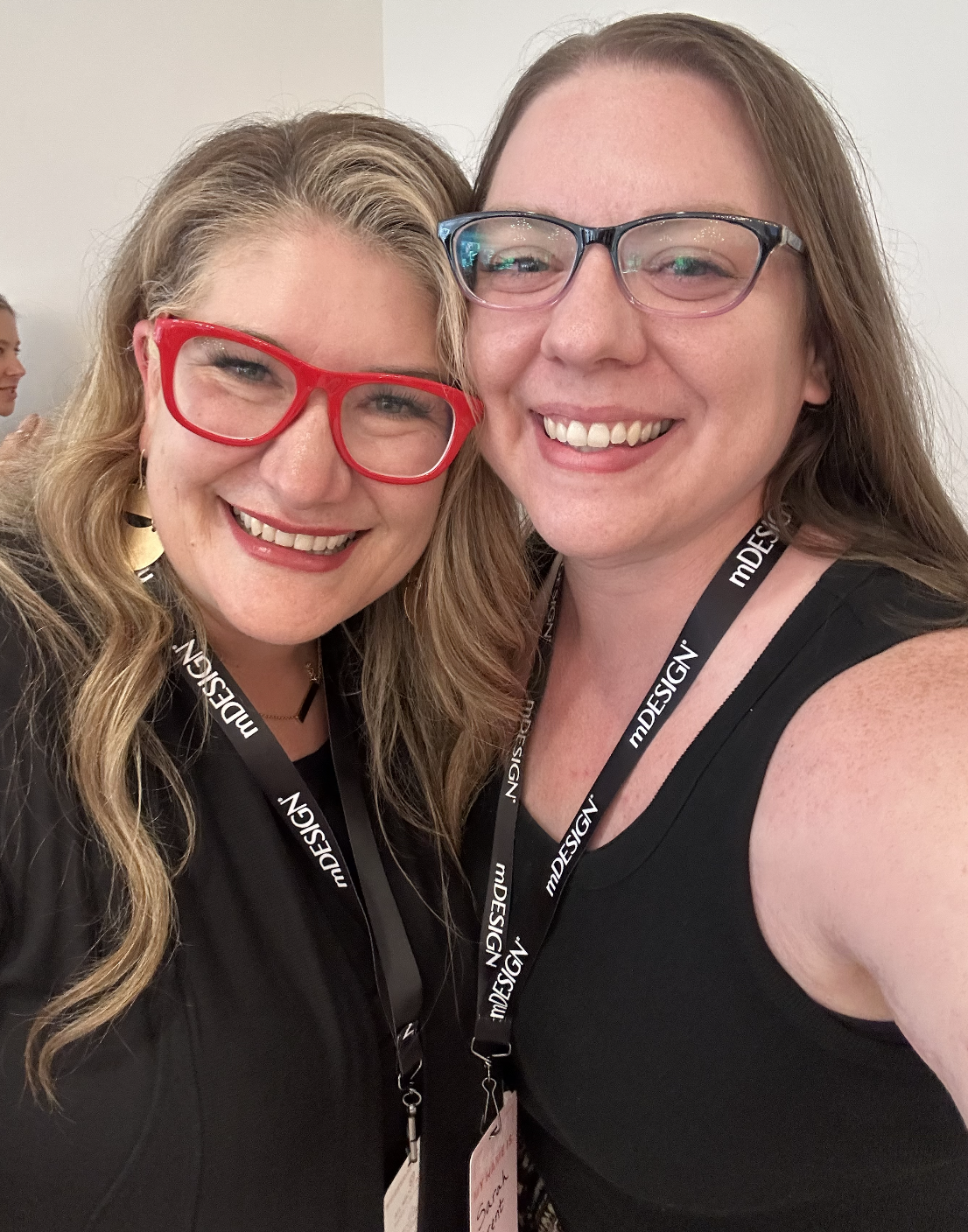
Melissa and Sarah at the How To Summit…we’re better together!
If you spend any time scrolling organizing content online, a certain image starts to emerge. The professional organizer is meticulous. She's been alphabetizing her spice rack since age seven. Her own home is immaculate. She lives by the Marie Kondo gospel and will help you joyfully purge every item you own.
But Sarah has been organizing for over nine years, and that image? It's never been her.
Sarah: "My room was a complete disaster growing up. I have not been organizing since I was a kid. It took me until I was in my twenties until I really realized — if I want to be happy in my house, I've got to start organizing."
For a long time, she stayed quiet about that. She watched organizers connect over their shared passion for tidy systems from childhood and felt like the odd one out. But the more she sat with it, the more she realized: if she felt like there was no organizer out there like her, her potential clients were probably feeling the exact same way.
Sarah: "I kept thinking — there has to be so many people out there who want to hire us, but are just like, I don't want someone who's going to come in and boss me around and tell me I have to get rid of everything to be happy."
Your Story Is Your Differentiator
What makes you you — your background, your experiences, your quirks — is exactly what will draw the right clients to you. Clients aren't just searching for credentials. They're searching for someone who gets them.
They're looking for organizers who have had firsthand experience with things like hoarding, chronic disorganization, downsizing, blending families, aging parents, late-in-life ADHD or autism diagnoses, or even something like rebuilding after a fire. And it doesn't stop at personal struggles — people want to know your hobbies, your interests, what you studied in school, even if it doesn't feel directly relevant to organizing.
Sarah: "Professional organizers are personal trainers for your home and closet. I would look for a personal trainer who's like me and has overcome some of the same struggles, so I know they know how to help me where I am."
They want to connect with you as a human being before they invite you into their home to go through their most personal spaces.
Sarah: "We are literally going through people's underwear drawers. This is not a light decision."
Vulnerability Goes Both Ways
There's an irony in the organizing profession: we ask clients to be incredibly vulnerable with us — to show us their clutter, their chaos, the corners of their homes they're ashamed of — but we often hold back from showing our own messy corners.
Melissa: "If we want to tell our stories to our clients, we have to tell them to each other first."
Sarah has known for a long time that she needed to share her story more openly. She even made a video back in 2019, encouraged by a friend, where she showed photos of her childhood bedroom — a genuine disaster. It felt therapeutic. But the fear crept back in.
Sarah: "I compare myself like any other human. I sit on social media and compare myself to what feels like the majority. And I just feel shame and embarrassment. I tell myself people only want to hear from the super organized ones."
She calls it exactly what it is: self-sabotage.
The shift she's working toward — and encouraging other organizers toward — is treating social media not as a highlight reel competition, but as a place to make real connections.
Sarah: "That's where I'm going to share who I am. That's what it's meant for."
You Can't Be Everything to Everyone (And That's a Good Thing)
One of the most liberating reframes in this conversation is about client fit. When you try to appeal to everyone, you dilute what makes you genuinely great for your people.
Sarah is warm, approachable, and relationship-focused. She builds connections with clients as she works through their homes. She doesn't want to walk in and dictate how someone should live. And that means she's not the right organizer for every client — and she's made peace with that.
Sarah: "I personally do not favor clients that want me to come in and boss them around. And I am okay with that, because I know there are organizers out there who love to do that — and that client needs exactly that."
When someone reaches out who isn't the right fit, Sarah doesn't see it as a loss. She refers them to a colleague who is genuinely better suited, and frames it positively.
Sarah: "I never frame it as 'I'm sorry, we can't do this for you.' It's always: I have a connection with somebody who sounds like they'd be amazing for you. This is what they specialize in, this is how they can help you."
No apology, no negativity — just good matchmaking.
Melissa: "I love give me psychology all day long. Give me your compulsive shoppers. Give me your people who undo everything we did last time — that interests me. But what I just described might be your worst nightmare. Cool. Know yourself."
The Comparison Spiral (And How to Break It)
Social media makes it easy to feel like everyone else has figured out something you haven't. Someone's project photos look more stunning than yours. Someone else has a team of 20. Someone started during the pandemic and seems to have built a perfect business overnight.
Sarah's practical advice? Unfollow or mute the accounts that trigger unhealthy comparison. Not because those people have done anything wrong — but because, as she says, "this is a me issue."
Sarah: "Comparison is our kryptonite. It's just going to kill us. And I guarantee the person you're comparing yourself to has someone they're comparing themselves to as well."
More importantly, comparison is a zero-sum distraction. Every hour spent measuring yourself against someone else is an hour you could have spent reaching out to a past client, improving your SEO, or simply doing the work.
One specific myth worth busting: having a team does not make you more of a "real" business. Solo organizers aren't lesser than multi-person operations. Organizers doing this as a side hustle aren't less entrepreneurial than full-timers.
Sarah: "Your success lies in where you want your success to be. If you don't want a team, you're not a failed organizer. You're not any less than any of us."
Small Moments of Authenticity Add Up
You don't have to write a manifesto about your life story to connect with potential clients. Sometimes it's one sentence on your website. Sometimes it's a casual Instagram story.
Sarah recently got back from a trip and posted about all the souvenirs and fridge magnets she bought — an organizer, buying knickknacks! She got messages thanking her for it, from people relieved to hear that a professional organizer was giving them permission to keep the things that made them happy.
Sarah: "I wanted to normalize that I'm an organizer with stuff, and you're allowed to have stuff too. My home is organized with stuff, and your home can be organized with stuff too."
She also talks openly about the fact that she grew up with a grandfather who was a hoarder. That one line on her website — that she knew how to navigate clutter because she lived in it — resonates deeply with a lot of people, especially those trying to break a generational cycle.
And she was once a nanny, which connects her with families who need their household managed, even though she doesn't have kids of her own. The point: you don't have to have personally lived every experience to serve clients going through it. Expertise and empathy matter more than a perfect biographical match.
Melissa: "It might be just that one sentence you threw in there as an afterthought that is what connects with people. You just never know what that little thing is going to be."
Be a Little Louder
The throughline of this entire conversation comes down to something Sarah says plainly:
Sarah: "Our voice is one of our most powerful things. We've got to use it."
There are clients out there right now who don't want the Home Edit aesthetic. Who don't want someone to tell them to throw out everything they own. Who want an organizer who has struggled and figured things out and now helps other people do the same.
And there are organizers out there who are exactly what those clients need — but staying quiet because they don't think their story is worth telling.
It is. Tell it.
Sarah Brent is a professional organizer based in Illinois and a mentor in the Inspired Organizer community. She's also the founder of Tidy Stock Photography, a stock photo library created specifically for professional organizers. You can find her work at [tidystockphotography.com].
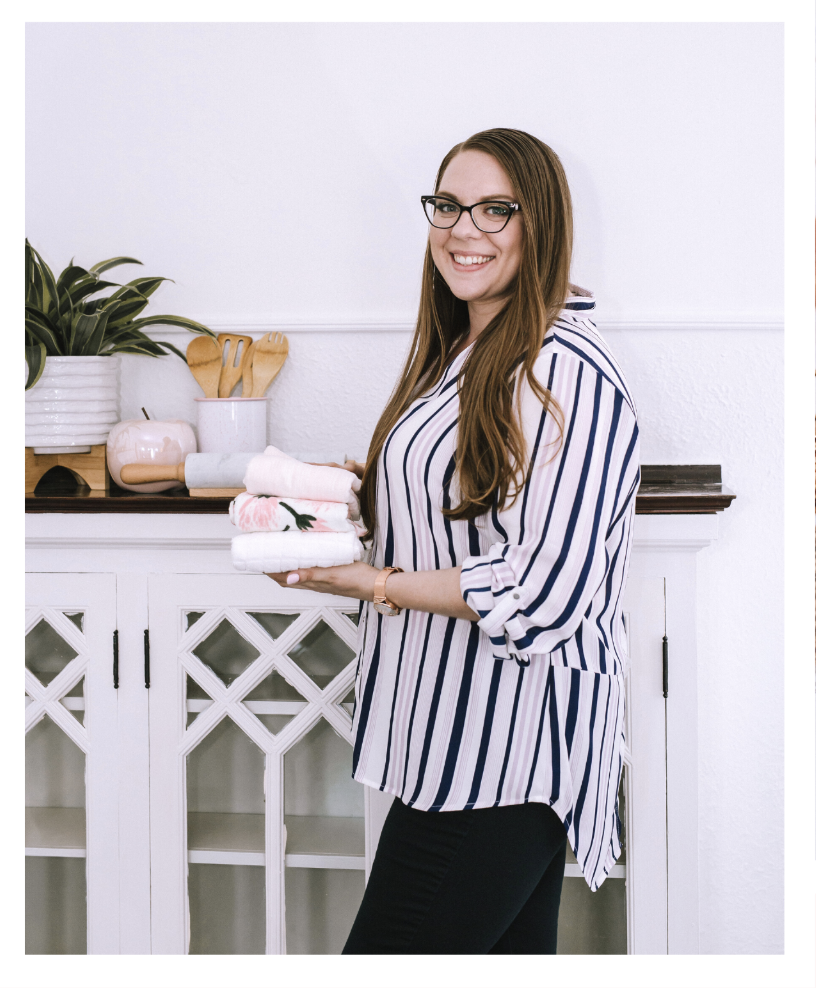
Sarah Brent of Practical Harmony