

239 | Year 4 of Organizing: Kim Snodgrass of Rustic Home Organizing (Pt 1 of 3)
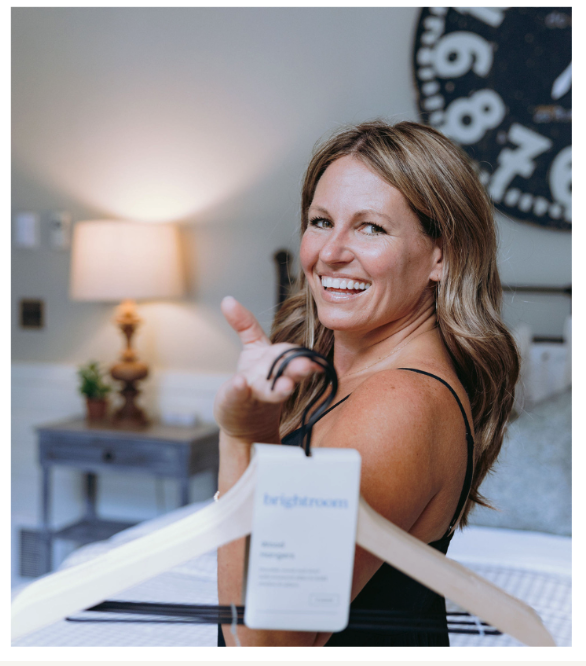
There are few episodes each year that get more feedback than when I talk to my friend Kim of Rustic Home Organizing.
She's back to kick off 2026 with us and is telling us about her 4th year of organizing, which brought challenges she never envisioned.
She has so much to say and I'm excited for you to hear it!
LINKS FOR LISTENERS
Connect with Melissa and Pro Organizer Studio: CLICK HERE
If you are interested in our Inspired Organizer® program, you can find us at www.inspiredorganizer.com and don't forget, we have a whole library of podcasts here, our YouTube channel, and you can find us on Facebook and Instagram at Pro Organizer Studio.
FULL TRANSCRIPT
Melissa Klug:
Hello, Pro Organizers. It’s your podcast host, Melissa, and we are back. It is January 2026, which is crazy, and I am giving you three episodes this week. Now, it’s with the same person, but I wanted very much to break this up into three more manageably sized episodes. Listen, I’m a big fan of a long podcast personally, but I know not everybody is.
So I wanted to break it up a little bit because my guest has so many crazy important things to say. This is my fourth year of interviewing Kim Snodgrass of Rustic Home Organizing, and Kim started at Pro Organizer Studio when her business was in its infancy. I always called her a baby organizer back then.
She’s not a baby organizer anymore. She’s very experienced, but she happened to join Pro Organizer Studio, and I said, “Hey, you’re brand new. Could I interview you about your business?” And then every single year since then, we’ve done an update, and it’s one of my favorite series that we’ve done. People constantly email me and tell me how much they love it.
So I know it’s not just me; I know it’s other people too. And the reason that this fourth installment with Kim is so important is because we are talking about some really big things that happened in Kim’s life this year that I know are very much a part of a lot of our lives. A lot of us are dealing with it.
A lot of us had kind of a tough 2025, and there’s just a lot going on in life, right? And she is so vulnerable and so transparent about what she’s been through, and I really just felt like sharing this in multiple parts was a way for you to really absorb what she’s saying. Because as I was editing it, I’m like, “Oh my gosh—this is great, and this is great, and this is great, and this is great.”
And it might not be for everyone. Maybe not everyone is going through some of the things that Kim has gone through or that I have gone through, but you might be kind of fighting your own journey, or you might be on your own journey, or fighting some challenges—and we have some nuggets in here that will help you.
That is, of course, my hope. So I’m going to give you all three episodes today so that you can just listen to them one after another if you are so inclined. Or you could break them up a little bit, but I just appreciated so much of Kim’s transparency and openness and willingness to help, and we talk about some really important things.

Kim Snodgrass of Rustic Home Organizing
And then I’m going to be doing a follow-up podcast about some of the things that I am doing in my business and my life that are scary in a good way, and I look forward to talking to you about that too.
All right. Without further ado, here is my friend, fellow organizer, Kim Snodgrass of Rustic Home Organizing.
Melissa Klug:
What year is this? I’ve literally lost track. Is this the fifth time we’ve done this?
Kim Snodgrass:
Fourth. Let’s see here—2022, 2023, 2024. It’s the fourth.
Melissa Klug:
Okay. Well, anyway, it doesn’t matter. All I know is every time I have you on, people love it. I’ve said it before, and I don’t think you believe me, but it is true. Every time you’re on, people are like, “Oh my gosh. I just really appreciated it.”
And I think this is going to be good because I think you and I have had similar years. It’s been a little bit of an upheaval year, right? Yeah— is that a fair thing?
Kim Snodgrass:
For sure. Oh yeah. I have definitely gotten a lot of insight and talked to a lot of professionals, so I think I have something decent to say—not just a Kim thought. I do think I have some nuggets.
Melissa Klug:
Just Kim thoughts would be absolutely fine, by the way. I love how you preface that with, “I have actually talked to professionals,” because I should talk to professionals, but in fact I don’t.
Kim Snodgrass:
I actually have a team of professionals.
Melissa Klug:
Oh, I love that. That’s fantastic. So I do have a therapist, but I’ve basically forgotten how to get to her office, so I really, in the new year, I need to fix that.
So a year ago when we were talking, you had your big event coming up and you had a lot of things going on. Tell me a little bit about where you’ve been and what your journey has been this year.
Kim Snodgrass:
Great question. And I was trying to figure out the best way to summarize this last year in business. I think that would’ve been my fourth full year as an organizer, so I’m hopping into year five, right?
Melissa Klug:
Yeah.
Kim Snodgrass:
So basically, yes—I was putting on a big event. We talked in January, and I think I was kind of tiptoeing around it a little bit, but my thoughts in January were, “Holy mother of balls. How am I going to pull this off?”
Melissa Klug:
That’s the title of the podcast right there.
Kim Snodgrass:
So there you go. How am I going to pull off this event?
I had basically put my entire business on the back burner and had fully sacrificed. I was literally Katniss Everdeen in The Hunger Games and was like, “I’m doing this for you ladies.”
So that was January, and that was a lot of, “Okay, Christmas is over, the holidays are over—why aren’t people buying tickets?” My event was scheduled for May 1st. And Melissa, I had put a lot of myself into this—not just myself, but the green, cold, hard cash into this. Money.
Melissa Klug:
Time, energy, effort, enthusiasm—yeah, all those things.
Kim Snodgrass:
And you know, per total Kim fashion: if you’re going to do something, you just gotta do it. Like whatever your mind thinks up, that’s obviously what has to happen. And it had to be a “How To Summit” type of event, because in my mind that was the only way to do it. Kudos to those ladies.
So January was fear— a lot of fear. My daughter and I went on a trip to Arizona to kind of dive into all of the details so that we weren’t interrupted, and we were even cold plunging into a pool to try and get people to buy tickets.
Every time somebody buys a ticket, we’re jumping in the pool and we’ll do it live. I mean, it was the stupidest thing. Looking back, I think I deleted it all because I was so humiliated that I did that. So anyway, that was January.
Okay—and now I do want to back up a little bit and say: two months ago, if you would’ve asked me to do this podcast, it would’ve been a hard no. In my mind, Rustic Home Organizing was dead. I was a shell of a human. I didn’t even know who I was.
And I actually haven’t talked about this to anyone. I’ve given you a small little inkling of what has come about the last couple months, but I have not talked about this. This has stayed really tight to the cuff with my family because I’ve needed time to process.
But I am so excited to be able to talk about it because I do believe that it could help somebody. And who am I speaking to the most right now? I’m going to tell you right now: it’s our Gen Xers.
Melissa Klug:
Yeah.
Kim Snodgrass:
And it’s our— I would like to call them my trauma mamas.
Melissa Klug:
Yeah.
Kim Snodgrass:
So I was a bigger mess than I realized, and it went way far.
And when I say I want to talk to the trauma mamas out there—you know, I left a 20-year marriage back in 2015. And when you do something like that, you have to go on autopilot. I mean, there’s— that’s how I started. I guess there’s other ways to do it, but I chose to go on autopilot.
And I kept that: “I have to survive. I have to make everything happen for myself. Nobody else is going to do it for me,” because I’ve been let down so much that it’s up to me now. It’s up to me to give my children what they need, my grandchildren what they need, what I need.
And we’ve all heard me talk about “the Chad,” and the Chad is still around. I don’t know why he’s still around, but he is.
Melissa Klug:
He’s a good person. And you are too.
Kim Snodgrass:
He’s still hanging in there. Yeah. I don’t know how many threads are left on that poor man, but looking back, I did not allow people to help me. Because if I allowed people to help me, including in my business, then I was counting on people—and I didn’t want to count on people.
So when I say I’m talking to the trauma mamas out there, it’s— I don’t know if there’s enough credit for those who have been through things, or enough information or resources to say, “Hey, it’s okay to figure out what the hell you just went through.”
Melissa Klug:
Yeah.
Kim Snodgrass:
And so I’m talking to the Gen Xers because we’re the last generation that we literally could stay in our own little bubble, and now all of a sudden we’re thrown into a community pool of piss with kids and adults swimming everywhere. And we’re trying to keep our heads above water.
And I think not enough of that is talked about. Two months ago, I wasn’t talking to any humans. I had shut the world down, and it was the most beautiful thing I have ever done for myself.
But how in the world— I still wonder— how did I get there? I don’t even know.
Melissa Klug:
How did you get to the bad spot? Or how did you get—
Kim Snodgrass:
—out? How did I get to the point of “I can’t function at all”? I couldn’t function in life.
Melissa Klug:
Everything you just said— I think it is… and we can’t do broad stereotypes, but Gen X, I think in general, we had to fend for ourselves. That was what we were taught. We were not really parented that hard.
I saw a thing the other day where someone on the internet was like, “Was it really true that you just left and then your mom said, ‘Be back by dark’?” And someone answered, “Yeah.” And you would argue about what the definition of dark was. Dark was when the bats came out.
And I think everything you just said is— first of all, you left a traumatic situation. You probably never fully dealt with it. You’ve had a lot of things happen since then, including starting a business, and your family has had a lot going on. And you became a grandma and a million other things.
And I think we don’t understand that we function at a point where other people would be in bed curled up in a ball, but we’re still going. And one day it catches up with you. You don’t know how it happened. You don’t know how you get there.
Kim Snodgrass:
Yes, you’re right. And I also want to say: if you are not a trauma mama and you’re not a Gen Xer, I really do hope that anything I have to say is something you bank in the back of your mind for the day you veer off the path and you end up in an effing patch of blackberry bushes.
Because yeah— that’s where I ended up. I was deep in blackberry bushes thinking if I make one more move, I will die. These thorns will stab my heart and I will die.
But okay— how did I get there? I’ve got a little list, and I’m going to read it. I don’t usually do that, but it’s really important for me that I don’t forget some of these things, because there are things I think a lot of us are doing.
And you also said something: we feel like, “How am I doing this? Most people would be curled up in a ball.”
I agree with you, but there’s this other voice over here— and I’m not even going to use the word “social media” anymore. I’m going to use “electronic,” because I’m going to tell you how broad I think this spectrum has gotten.
There are voices constantly telling you, “When it gets hard is when you’re about to make your big break.” Well, I call absolute bullshit because you don’t know my life. It’s toxic positivity, which is my—
Melissa Klug:
—least favorite thing.
Kim Snodgrass:
Yeah. So you’re telling me I’m supposed to have a full nervous breakdown—which is what I had—and that means I’m about to make everything great? You don’t know my life.
It’s so important to be careful what you are preaching out into the universe, because there are people listening to it, and there are people who are going to say, “I am not good enough. I am not strong enough. I am not smart enough,” because that person over there— who’s only showing 0.5% of their life— is telling me that I’m not tough enough.
So where— how did I get there? I was overthinking my every move. Every move. By the time I crescendoed up to my full nervous breakdown, there were days where even thinking about going to Target was a spiral.
“I’m going to get up, get ready, go to Target.” And while I’m getting ready: “Okay, it’s raining outside. What coat should I wear? If I don’t wear a coat, my sweatshirt will get wet. If my sweatshirt gets wet, I’ll get cold walking back and forth from the car. But if I wear a coat, I’m going to get too hot in the store. If I don’t wear the right shoes, the floor is slippery and the last thing I need is to slip.”
Or: “I wonder if that row of parking that I like will be open.”
This was my daily life. And it wasn’t just business. It wasn’t just, “Oh, I wonder if this is what I should be doing.” This was, “If I go get the mail, will the mailman have already come, or will it be yesterday’s mail? So maybe I should just wait until three o’clock.”
I couldn’t stop my brain from analyzing and thinking about how to prevent myself from being uncomfortable.
Melissa Klug:
Okay.
Kim Snodgrass:
I couldn’t. It was the most uncomfortable thing. And I had many days where I was looking into places to check myself into.
Because what was going on in my head— these weren’t suicidal thoughts. This was: “I think I’m going crazy.” I actually think I’m going crazy because you can’t stop the—
Melissa Klug:
—thought.
Kim Snodgrass:
I can’t stop the thoughts.
Melissa Klug:
Yeah.
Kim Snodgrass:
This was like New York City in my head. Maybe Tokyo in my head. This wasn’t the rural living that I have. This was full, alive Tokyo going on in my head.
And I would stay at home for days. There was one six-day period where I didn’t leave the house. Even if Chad asked if I wanted to go out to dinner, I would think: “Where are we going to park? I don’t want to… I don’t know if I want to go to that restaurant because I don’t know if I like that food… it’s cold outside and I don’t want to get cold… it’s going to take so long to drive there…”
It was not good.
I was trying to fix myself almost every hour of the day. “Maybe if I listen to this podcast. Maybe if I listen to this audiobook. Maybe if I take this course. Maybe that will fix me. Maybe then I’ll be like, ‘Okay, all this makes sense.’”
Melissa Klug:
It’s the same thing clients do when they go out and spend $2,000 on bins and think that’s magically going to fix everything.
Kim Snodgrass:
Yes. It’s the same thing. The next thing out there is going to fix me.
Melissa Klug:
Exactly.
Kim Snodgrass:
And all the funny things I had said half-heartedly— like, “I want Chad to retire and mow lawns”— I had taken that so seriously that I felt like a failure that Chad wasn’t mowing lawns in the summertime with his shirt off, with a cold one, on a riding lawn mower.
Because we said that the first year I got into business, it was just lighthearted. But I had started to become so disappointed in myself that I felt like I hadn’t lived up to it. Like I wasn’t holding my end of the bargain.
I started committing to everything. I committed to Welcome Home Committee with the Chamber of Commerce. I committed to being secretary with the Chamber of Commerce. I had chronic pain in my hands. I kept moving my own goalpost. Nobody else was moving it— I was moving it.
I had seven huge business ideas, and I was hellbent that I was going to make them all come true. Big ideas: the event, the podcast, the organizing business, the keynote. I was coaching with a keynote speaker coach to try to get my keynote dialed in. I don’t even remember the other three. They were just more, more-ish.
Oh— I was going to buy a venue. I planned to buy a venue. “I can buy a venue.” Every day it was this noise and constant disappointment in myself, and feeling like it seems so easy.
And this is where not just social media, but virtual/electronic anything can take over without even realizing it.
I would put into ChatGPT all of my ideas. Do you know how simple ChatGPT makes everything look?
Melissa Klug:
Oh yeah. It’s the power of like a billion brains. And so it looks very simple.
Kim Snodgrass:
I literally gave all my thoughts to it. It typed out a business plan. And I remember walking up to Chad and going, “Look, I can do it. I can make 10K a month. It’s so easy—right here.”
And I named my ChatGPT “Fred.” I was like, “Fred, look— step by step. That’s all I have to do.” No. That’s not all you have to do.
So just to back up: January, I’m like, “I’m not going to be able to pull this off.” February, tickets start selling. Great. Then I get a client— because I hadn’t been working for four months— a moving client. Wonderful. I get some money in the bank. I feel more confident, like I’m not just mooching off Chad (which is a whole other thing).
And this client picks me over a bunch of other organizers, and I’m like, “Okay. Rustic Home Organizing isn’t going to die after all.”
Then I roll into March. Tickets are selling, and I’m thinking, “Oh, I’m going to slay this.” I finish my organizing job the first week, and then it’s like, “All right, it’s go time for the event.”
And then I start to get absolutely pooped on by so many people. The people that promise things don’t follow through. The people that are full of shit are still full of shit. The empty promises. “Oh yeah, we’ll totally do that.” “Oh yeah, we’ll totally be a sponsor.”
And the constant no’s when I was trying to get sponsorship— the constant being turned down— was just beating the shit out of me. And I didn’t realize it. I didn’t realize the toll it was taking on me because I’m on autopilot, you know? I’ve got to see this thing through.
So May hits: event day. Absolute success. I will not say anything different. It was an absolute success.
And because it was such a success, I had people asking when tickets were going on sale for next year, so I jumped right into year two.
Melissa Klug:
Right.
Kim Snodgrass:
And I’m still kind of riding the high. I’m like, “I freaking slayed that. What else can I do? I can be an event planner now too. This is so cool.”
May—I get through. June pops in. My granddaughter’s third birthday was the first week of June, and I do this big extravagant strawberry-themed birthday for her, just for our family.
And I’m like, “Oh yeah, I had a couple people reach out— would you ever do a party?” And I’m like, “Oh yeah, I’m totally going to have another business. This is so cool.”
So then I’m diving into Pinterest to look at events. I’m diving into organizing— “How can I get my organizing business back up?”
I’m deep diving into Pinterest, and then I come across Jenna Kutcher. And I’m not mentioning her because I have anything negative to say about her or her structure— but I got sucked in hard. I was like, “Okay, so I need to start advertising on Pinterest. I need to start posting to Pinterest.”
So then I reach out to this sweet girl that my daughter went to college with: “You’re going to help me with social media. I need help, I need help.”
In June, I’m starting to broaden my thoughts on everything I want to do. And the world is just getting huge. But at the same time, I’m not saying this out loud: I am so incredibly overwhelmed. I don’t know which way is up.
I don’t know what audiobook I should be listening to, what podcast I should be listening to, what prompt I should be putting into ChatGPT, what I should be searching on Pinterest, who I should be following on Instagram. The list goes on and on.
Whose newsletter should I subscribe to so I can get nuggets? Which free course should I sign up for to see what I can get free? But then I’m immediately sucked into the paid course.
And I’m not knocking courses because you know me—I’m the biggest fan of Pro Organizer Studio. Which is kind.
I am, but you’re not constantly asking me to spend more money. You give us extras, but it’s not three times a week in my inbox.
So that’s June. I’m questioning everything. I’m feeling unsettled inside. I don’t like anything. I don’t love anything I’m doing, but I’m still pretending like I do.
Melissa Klug:
And you’re doing something, so it’s like your brain’s already overwhelmed and you’re like, “Okay, I’m not happy over here, but maybe this will make me happy.” And then you just— bing-bong— you’re all over the place.
Kim Snodgrass:
Totally. Yeah, totally. But I’m not admitting this to anybody.
Okay. July meltdown number one. Fantastic meltdown number one.
Melissa Klug:
I think that’s a great time to have a meltdown. Yes. I mean, it’s perfect.
Kim Snodgrass:
Meltdown number one: Fourth of July weekend. I’m vacuuming our pool. And if you’ve heard me before, you know I live out in the country and we have a lot of pine needles. I have what I like to call a redneck above-ground pool, but it is my therapy pool.
I’m vacuuming it— and it’s this weird vacuum system— but I asked Chad, “Will you turn off the water when you go up to the house?” because I was almost done.
Well, when you turn off the water, it stops the suction flow. I was an hour and a half in, vacuuming my pool, and he turns off the water without me seeing him walk up.
All of a sudden I’m like, “Oh my gosh— why is everything going back into the pool?” And I threw the vacuum. I kicked a couple things. I started screaming and crying and said, “I can’t live like this anymore. I can’t stand the messes. I’m so overstimulated. I can’t look at one more undone project. I can’t be here.
I cannot be here. I love all of you, but I cannot be here. This is not healthy for me.”
So that was meltdown number one. And I wanted to tell everybody they could suck a—you know what.
My family walked on eggshells for about a month, and then Chad decided for my birthday in August he was going to take me away. So he took me away to Walla for wine tasting, and I needed that. I felt okay— whew— I’m good, right?
And then I had another client reach out at the end of August, wanted me to come back and get some organizing done. I’m like, “Okay, income’s coming in. Rustic Home Organizing is still alive once again.” August kind of went by okay.
End of August/September: I helped my daughter move into a new apartment. She had just graduated. She was doing grad school at University of Oregon, and she got her first teaching job, so she was kind of drowning— grad school and full-time teaching with special education kids.
So I went down there for a few days and kind of fell back in love with serving— helping people make a space feel like a much-needed hug, basically. And I kind of felt like my soul coming back to me. So that was September.
And then October— this is when things really went south.
My kitty cat died. I’d only had this cat for about 16 months, but it was my mom’s cat. My mom died of breast cancer 10 years ago, and this was her kitty cat. And her husband— my stepdad— had passed away this summer prior.
There were three cats. They were 15 and 16. Two of them were siblings. They were going to take these cats to the shelter, so Nicole and I— my oldest daughter— drove down five hours, grabbed the cats, and brought them back.
It took about 12 months, but Boo (that was his name) started to finally come around and let me touch him and pet him. And then he started coming inside in September. It was the sweetest thing ever.
Anyway, Chad went away on a hunting trip and I was home alone. I woke up and went, “Something’s not right with Boo.” All of a sudden he was glazed over in his eyes— something wasn’t right. He got worse that day.
Next morning I called and took him in, and they put him down immediately. Like, he was bad and I didn’t know it.
And I had to take that sweet guy home with me, wrapped in a blanket, and I had to bury my cat in my backyard, in our little pet cemetery. Nicole came and helped me dig the hole.
And I’m saying these details because it’s important to know these were massive triggers that I didn’t know were happening. So I lost the kitty cat, but I really lost my mom again.
Melissa Klug:
Yeah, absolutely.
Kim Snodgrass:
I’ve never had to put an animal down. So I put an animal down. I had to dig a hole.
Melissa Klug:
Yeah. That’s not great. I mean, everything you’re describing is very upsetting. It was very traumatic. It’s upsetting and it’s terribly sad.
Kim Snodgrass:
Traumatic, yeah. But then— I mean, I literally had dirt on my shoes and had to get to a chamber meeting. I basically still had the shovel in my hand.
Okay. So October was rough, and I knew I needed to leave. I had another massive meltdown. I know I’m kind of— I really want to wrap this into business, and I hope you can hang in there with me. I’m almost there.
Melissa Klug:
Business is life. They’re inextricably linked, so it doesn’t matter. That’s personal.
Kim Snodgrass:
It does. There’s a happy ending.
Melissa Klug:
Yes.
Kim Snodgrass:
It was very traumatic October, and I knew I needed to leave. So I booked a trip to Montana for 10 days. This is super random, but I ended up joining Trusted Pet Sitter, where you can apply to watch somebody’s home and their pets while they’re away. There are homes all over the world—you could go to Greece. You have to pay for your own travel, but some people do it just for that reason.
So I pop on and see this beautiful ranch in Montana— absolutely gorgeous. It’s speaking to me. Horses, a couple dogs, 40 acres— absolutely beautiful home. So I applied for it and I got it. What was supposed to be six days turned into 10, but it was amazing.
And I decided when I got there— beginning of November— I was done. No electronics. No social media. Nothing. No TV. I shut it all down. I knew I needed to reset because something wasn’t right.
And I had been speaking to a lot of professionals. I have a team of professionals that have helped me through this. One of them was Alyssa— she’s kind of a clarity type of coach— and she was the first one talking to me about a nervous system.
And this is where my story is leading up to. I want to talk to all of you entrepreneurs out there: I need you to listen to your nervous system.
Your nervous system— it’s looked over. It’s not woo at all. It’s literally wiring in our brains. And it’s literally about—
Melissa Klug:
—your longevity of your life.
Kim Snodgrass:
Yes. Yes. And this is where my Gen Xers need to understand: we weren’t wired to have all of this in our face. So we have this battle of solitude and “Oh, I need to filet myself open like an ugly catfish.”
And finding that balance is really difficult. Very difficult, I believe, for Gen Xers— especially those that are empty nesters— because all of a sudden, even though I’m an empty nester, I feel like I can conquer the world. Well, guess what? I’m not 25 or 35 anymore.
Melissa Klug:
We have a disconnect of the amount of time you have available to you and then the other things that have changed in the intervening 25 years since you became a parent.
Kim Snodgrass:
And you also have to realize that when you’re in the generational-gap age that I’m at— fifties— there are also things that we appreciate that we didn’t get to appreciate, but the world makes us feel like that’s lazy.
So when I was away for 10 days, I started to realize— yes, there were things I wanted to do. But even prior to that, after Boo died, I was home alone for a couple days. I dove into baking. I made fresh homemade donuts. I just ate my sorrows. I Instacarted wine. I allowed myself to feel the feels, and that’s when I really knew I needed to get away.
So yeah, I’m in Montana and I’m resetting. I did get visits from my oldest two daughters on separate visits because they were like, “Where are you going? This is weird. We’re going to check on you.”
Courtney flew in from Boston for a couple nights, and Nicole flew with me there to make sure everything was fine. She stayed two nights and then left.
So Montana was amazing. That brings me to December. December is my month of learning how to reset my nervous system. And resetting your nervous system is not an easy task.
Melissa Klug:
No.
Kim Snodgrass:
It’s not. It’s wiring that isn’t something you just fix in a weekend. It’s conscious effort. It’s turning the noise off.
Melissa Klug:
And we’ve been conditioned to ignore— electronics are conditioned to allow us to ignore all those things—
Kim Snodgrass:
Yeah.
Melissa Klug:
—because dopamine.
Kim Snodgrass:
Exactly. And what my youngest daughter said was, “It sounds like you needed a dopamine detox.”
Melissa Klug:
I said—
Kim Snodgrass:
—yeah, absolutely. That is what I needed.
Melissa Klug:
Okay, this is the end of Part One. You can hit the podcast feed for Parts Two and Three. When you’re ready, we are going to be talking dopamine detox, which is something that you might not even know that you need. I certainly do, and my guess is that a lot of you do as well. So we’ll be chatting about it in the next episode.
Talk to you soon, organizers.
CONNECT WITH PRO ORGANIZER STUDIO
We’d love to work with you. Send us an email (Melissa answers them personally!) or connect with us HERE…or check out our programs HERE.
If you’d like to watch our FREE seminar, The Pro Organizer’s Profit Plan—check it out here!