

240 | "I needed a dopamine detox" (and you do, too!) Part 2 with Kim of Rustic Home Organizing (2 of 3)
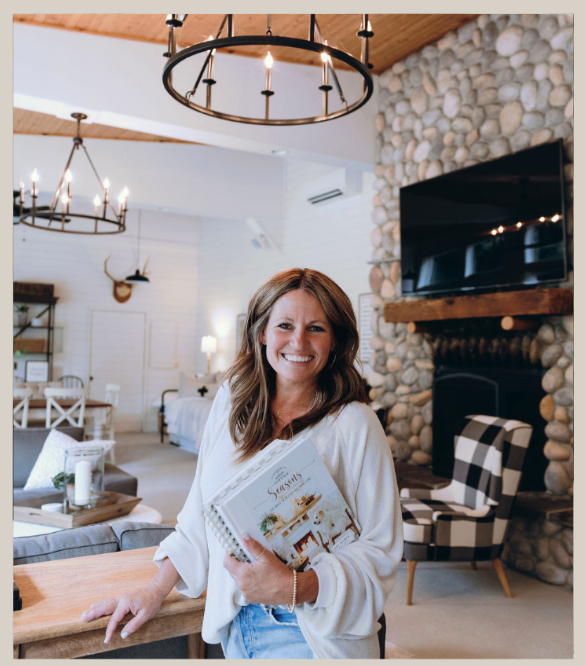
This is part 2 of my conversation with Kim Snodgrass of Rustic Home Organizing. In this episode, we talk about her realizing she needed to make major changes and how she did it.
You can listen right here by pressing play, or you can read the full transcript below!
LINKS FOR LISTENERS
Connect with Melissa and Pro Organizer Studio: CLICK HERE
If you are interested in our Inspired Organizer® program, you can find us at www.inspiredorganizer.com
We have a whole library of podcasts here, our YouTube channel, and you can find us on Facebook and Instagram at Pro Organizer Studio.
FULL TRANSCRIPT
Melissa Klug:
Hey, Pro Organizers. It’s Melissa. If you missed Part One of my conversation with Kim Snodgrass, please go back one in the podcast feed. And if you’re just joining us from Part One and going straight into Part Two, then I’m going to give you the teensiest bit of overlap.
You’re ready to hear about dopamine detox and a lot of other things. These are things that might not be familiar to you, but that I am implementing in my own life, and we’re going to talk through it.
And again, Kim is super vulnerable about her journey and about what she has been through, and I hope it’s helpful to you. So this is Part Two, and Part Three will be up in the feed when you are ready.
Have a great day.
Kim Snodgrass:
December is my month of learning how to reset my nervous system. And resetting your nervous system is not an easy task.
Melissa Klug:
No.
Kim Snodgrass:
It’s not. It’s wiring that isn’t something you just fix in a weekend. It’s conscious effort. It’s turning the noise off.
Melissa Klug:
And we’ve been conditioned to ignore. Absolutely—electronics are conditioned to allow us to ignore all those things.
Kim Snodgrass:
Yeah.
Melissa Klug:
Because dopamine.
Kim Snodgrass:
Exactly. And what my youngest daughter said was, “It sounded like you needed a dopamine detox.” Correct?
Melissa Klug:
I said—
Kim Snodgrass:
—yeah, absolutely. That is what I needed.
And I didn’t even… there’s stuff— you can go to these doctors that will literally hook your brain up and they can see how active it is, which is what I’m planning to do.
But a friend of mine— after I got back from Montana, I decided that I wanted to make sourdough. I tried to make sourdough. I couldn’t get the starter going. So I finally called this girl locally and I’m like, “I know you have starter. Can I buy some off of you?”
And she’s like, “No, but you can have it. I get rid of it every day.”
So I went over there, and I’m so glad I did. We ended up talking. She had put on this event— totally different type of event. Hers was more like an expo. And she started to tell me everything she experienced after it.
And I literally cried when I left her house because everything she described was what I had been going through. She talked about: “I hated my family. I couldn’t leave the house. I wanted to divorce my husband. I didn’t want to ever do anything ever again. I went away. I started seeing a mental health professional.”
And she was validating all of this nervous system reset.
I am so glad I went there that day. And my hope today is: anybody that has a little person or thing in the back of their head going, “Something doesn’t feel right,” please listen to that. We do not give our bodies enough credit.
I even stopped wearing my Apple Watch— my Whoop. When I say I disconnected, I literally have a normal human watch on now. I disconnected from everything, and I’m still disconnected.
I pop on Instagram every now and again because my daughters send me some really freaking funny stuff.
Melissa Klug:
Yeah.
Kim Snodgrass:
But if I even find myself scrolling, I have to consciously tell myself, “Put it down.”
If I go on Pinterest to look up a recipe, I consciously have to tell myself, “Don’t click on that outfit. Do not click on that outfit.” Because then you’re going to go down this rabbit hole of, “Oh, maybe I can be an influencer,” or “Maybe I can do this.”
Oh, the rabbit hole. Oh my God. It’s so bad.
Melissa Klug:
Yeah. I know I’ve talked about this before, but it’s one of my favorite things I’ve ever heard: We get more information in one day than people in the 1850s got in their entire lifetime—their whole lifespan. We get that delivered to us in one day.
And that’s average usage, right? A lot of us are probably on our phones way more than average. That is disruptive. It’s too much. We’re not meant to have that much information.
Kim Snodgrass:
Right. It actually gives me a lump in my throat thinking about it because it’s so true.
And we remind our clients all the time: don’t hold on to all these things because they remind you every day. It doesn’t allow you to live in the moment.
But then we go home and we overthink our every move— what another organizer is doing, and “Did I do a good enough job?”
And I think turning the world off is okay.
So for me, I have a list here. I’m going to tell you what I did to start to reset my nervous system. And these are things that nobody told me to do. These are things I intuitionally listened to and felt like, “That’s what I need.”
My number one thing is I walk in my yard barefoot with a glass of wine. It’s literal, and I do it until I’m ready to be done doing it. I don’t set a timer— none of that bullshit. I like to tootle in my yard and deadhead flowers.
Making homemade donuts— by the way, if you have never made a homemade donut, you are missing out because they’re easy and they’re so good.
Melissa Klug:
Okay, I want to hear your whole list, but I did learn how to make sourdough this week, and I feel very accomplished in my life. And when you said, “Oh, I started baking,” I was like, “Oh yeah.” I’m into it now.
I really want to embrace some of those slower-living kind of things. So I will try donuts.
Kim Snodgrass:
Absolutely. You’ve got all the stuff sitting in the house. Anyway— absolutely.
And I did master sourdough. I’ve made multiple loaves. I have three rising right now. And I made cinnamon rolls. And I have a great sugar cookie sourdough recipe.
Okay, fantastic. And I think I’m going to do sourdough noodles. So I’m all into the sourdough.
Melissa Klug:
Oh, I love it.
Kim Snodgrass:
It’s very—
Melissa Klug:
Calming.
Kim Snodgrass:
Oh. And especially if you put on some good music. The thing is, if you shut the other stuff down— you don’t check your phone, you don’t hear an email and think, “Oh, I need to go check.”
It’s so important to do that.
I watched cheesy Christmas movies in my room without a bra while I folded clothes and hung up my clothes. Love that. And I did it at a slug’s pace. And now I look forward to doing my freaking laundry because I’ve allowed myself to say, “I’m going to turn on a movie and enjoy this.”
Melissa Klug:
Yes. Period.
And you’ve said a lot of important things and I haven’t wanted to interrupt you because that’s what I do. I love to interrupt people.
But I think the danger of where we’ve gone is: “I have to be folding laundry, and I have to do it quickly because I have 10 other things to do. And also I should be listening to a business podcast while I do it.”
And if I’m not listening to a business podcast, I should listen to a book— but not like a murder mystery like I want to listen to. I should listen to something like personal finance.
There’s so much pressure that you can’t relax. I did a podcast about this a few months ago: why can’t we relax?
There’s pressure to consume and be productive. But I’m already doing the freaking laundry. That is the thing I’m doing. So why do I feel like I have to do 12 other things while I’m doing the thing I’m doing?
Kim Snodgrass:
Exactly. And then everybody’s telling you, “You’re a CEO. Act like a CEO.” I’m going to tell you right now: that doesn’t work for me. I’m not a CEO— I’m an organizer. I don’t want to be a CEO.
Melissa Klug:
Well, here’s what a CEO of any decent-sized company has: tons of people doing tons of things for them. They have an org chart. People are answering their phone calls and texts. People are making travel reservations. If we’re talking big time, they’re not even driving themselves to work.
We are CEOs, but in a very different way. If we think we have to be a CEO and also the janitor— that’s what it is to be self-employed. It’s very different than what we picture as a big-time business CEO.
Kim Snodgrass:
And I do sort of want to eat my own words. I’m not saying that isn’t a way of thinking that works for somebody, for sure.
But I want to speak to the person who feels like that’s how I have to think. No, you don’t.
And I’ll give you a couple other things I’ve done to start resetting my nervous system, and then I want to loop back to why the CEO mentality doesn’t work for me.
The folding clothes— I can’t believe what a game-changer that was. I literally have two loads sitting on my bed, and I can’t wait to fold them because I know I’m going to turn on a movie.
And it’s those cheesy movies you can predict: it’s the realtor who’s going to save the farm or ranch. Great. And her long-lost boyfriend, and they’re going to reconnect. Or it’s the lawyer who quit her job and she’s going to become a baker.
At the end, everybody’s side by side like they’re taking a photo and the camera pans on them. It’s so predictable. It’s great.
I can walk away for a minute and I don’t feel like I’m missing something. That’s why I love cheesy movies.
I stopped calling people and I stopped reaching out to people. And this is a big one for me, because if you go back and listen to podcasts, that was my jam. But I was doing it because I felt like I had to. I wasn’t doing it because I wanted to anymore.
And there’s a really big difference. When you feel like you’re forcing yourself to do something, that’s a yellow flag— like, “Whoa, what’s going on here?”
You don’t have to do what you did a year ago. It does not mean you have to keep doing it.
Melissa Klug:
Also, just because you used to like doing something does not mean you have to currently like doing it. You can say, “That was a season. I’m done with it.” Or, “I’m taking a break, and maybe I’ll be called to do that again.”
But that pressure of “I’ve always done this thing, so I have to keep doing it”— relieve yourself of that.
Kim Snodgrass:
Exactly. And I learned that from my clarity coach. She said, “Kim, I’ve got really bad news for you: nobody gives a shit. Nobody’s going to miss you. I’m telling you right now.”
And she’s right. Not that people don’t care about me or I don’t have friends, but everybody is also in the trenches of their own life. They’re not going to go, “Gosh, Kim hasn’t texted me in a while.” No, they’re not. Maybe if they drive past my house.
Melissa Klug:
Also, as I like to remind people, the phone works both ways.
Kim Snodgrass:
Both ways. Yes.
Melissa Klug:
If you have someone where you’re always the person holding it together, remember: the phone works both ways.
I had a friend once who said, “You haven’t texted me in a really long time.” And I was like, “I’m right here. If it’s bothering you, you also didn’t text me.”
So it can help you figure out who’s really important to you.
Kim Snodgrass:
Also, this doesn’t mean you go into victim mode. It doesn’t mean the world’s against you or everybody hates you. You don’t need to turn into a curmudgeon.
But it’s okay to go off-grid for a little bit. And you don’t have to explain yourself when you do reach out. You don’t have to say, “I’m sorry, I’ve been MIA.” You can just say, “Hey, what’s going on?”
It’s all about setting your nervous system.
Melissa Klug:
I saw a thing one time that said self-care is okay. Going off the grid is okay. Declaring your own death and entering the witness protection program is okay. Pretty much what you’ve done.
You’re allowed to have those seasons and say, “I don’t feel like engaging with people right now.”
Kim Snodgrass:
So here’s the most wonderful thing that came from all of this: I fell in love with organizing again.
When I went away to that house, of course people are going to stalk you on social media, right? Well, she figured out I was an organizer. So she said, “Would you be willing to organize my kitchen and my pantry for me?”
At first I was like, “Oh, I just want to go away.” But then I thought, “No, because I’m there for 10 days. Why not? I can do it at my own pace. I can do it with a glass of wine an hour a day if I want to.”
And I absolutely fell back in love with it.
Because you know I texted you close to that time and said, “I hate organizing. I don’t want to do it anymore. I hate everything about it.”
And I fell back in love with it. I realized I had not respected my own personal boundaries, my business boundaries, and my organizing boundaries. I had let too much literal crap in that I was not mentally prepared or capable of handling.
So I fell in love with organizing again.
So I got back from there mid-November. And then the first week of December, I got a 911 from a client who lived in Oregon, had moved to San Luis Obispo, California, and said, “I know this is a long shot, but would you come down and help us?”
And I went, “Heck yeah, I will.”
So they paid for me to come down there. I gave myself extra days. It’s gorgeous there.
Melissa Klug:
It’s a great place to be.
Kim Snodgrass:
It was 85 degrees and sunny. The Christmas decorations just look prettier there. And again, I love this family. And I was like, “Ah, I do love organizing. I really do love it.”
My youngest daughter ended up coming with me for some of it. She had a rough week at school, and plane tickets were reasonable. I said, “Just come down.” So she popped down, and it turned out to be absolutely wonderful.
It made me realize there’s a difference between taking opportunities we don’t want but feel like we have to, and not taking opportunities because we feel like we don’t deserve them.
I would usually have thought, “No, I can’t do that. That’s too close to Christmas. I should be home prepping for my family.” And I just went, “No, I want to go and organize, so I’m going to do it.”
Melissa Klug:
Everything you just said started with “I should.” I should, I should, I should. There is no should.
Kim Snodgrass:
There is either you want to or you don’t.
And I’m not saying you can just ignore reality— we have to survive in this world. I get that. There are boundaries now.
This is my final bit, and then you can interrupt the hell out of me.
Listen, I do not have scientific facts. This is what I felt like I needed. That’s it. And I want to give people a permission slip to do that for themselves: listen to your inner self, period. And get creative with your life. You don’t have to live your life a certain way.
Here’s my example. I’ve been given an opportunity to possibly get my old job back in Florida. And when you ask somebody who lives in Oregon— in the middle of hell season— if they’d like their job back in Florida, that’s really hard to say no.
But I didn’t say yes, and I didn’t say no. I said, “I want to fly down. I want boots on the ground. I want to talk through some things. I want to see how I feel. I want to see how creative we can get with the situation.”
I don’t know if I’ll take it. I have no idea. But I knew I didn’t want to say no, and I also knew I didn’t want to say yes.
And immediately, the few people I told were like, “But you and Chad… what about Chad?” Chad and I are fine.
He’s in a season of life right now with his older boys. We’re a blended family. I’m an empty nester. He’s in the thick of it. He’s got a sophomore and a junior.
If I did a little bit of back and forth for a couple years, that could actually be really great for us.
We automatically go to, “But wait, you can’t do that.” But why can’t I? But why can’t I?
So I want to give people permission to be creative with whatever your circumstances are right now.
Now, a mama of four young ones probably can’t take that opportunity as easily as I can.
Melissa Klug:
Right.
Kim Snodgrass:
But there might be another opportunity that crosses her path that she can take.
And I have a really easygoing man. You might not. That doesn’t mean that’s bad— it just means that’s your situation.
But there might be another way to make your situation creative that lets you thrive.
And I think you can think more creatively about what works for you and your family. Shutting out the world can be what works for you.
As soon as you let the world back in, you automatically think you’re doing it wrong. And I just want to give people permission to do that.
Melissa Klug:
I think part of it is a couple different things converging.
Everybody thinks that— because of the internet, comment sections, all of that— everybody thinks they get to weigh in.
So when you say, “I might move to Florida and my partner is in Oregon,” there are going to be people like, “Oh wow, did you hear about Kim and Chad? They’re not doing good.”
I also happen to have a husband who’s super chill, and our relationship is not dependent on us sitting on the couch next to each other all the time and being codependent.
If I said today, “You know what? I’m leaving for a month. Maybe two months,” he’d be fine. “Let me know what you need. Can we FaceTime?” You know?
What works for you is not anybody else’s business. But now because of comment sections, everyone feels like they can express an opinion about your life. And then that leads to the “should.” “Well, I shouldn’t do this. It would look bad.” That’s what happens in your brain.
Whether it’s taking a nine-to-five job again or doing something totally different, it becomes: “What are other people going to think?” Screw that.
Which is another reason not to crowdsource. You don’t even have to mention it.
We crowdsource everything now. I saw something yesterday where someone said they were in the grocery store and a woman asked ChatGPT what aisle the tomatoes were in— instead of using her eyes.
And I know I talk a lot about social media, but I saw a TikTok where a woman said, “Here are my symptoms— what should I do?” And the entire comment section said, “Go to the emergency room.” Why are you asking TikTok?
But we do that about so many parts of our life because we’ve been trained to.
Kim Snodgrass:
And I’ll bring this back to organizing and starting a business, or being in business— no matter where you’re at: teams, no teams, 20 years, five years, two years, thinking about it.
Opportunities that we allow ourselves to take can present new opportunities we didn’t even know were possible.
So now I have this pet house-sitting thing: I could go do pet sits, and if somebody wants some organizing and I can make some money. And I’m now— I have another one, and the Montana girl wants me back.
And I’m like, “I never thought I would travel so much to do organizing,” but I love it. Because I just do it, and then I go home.
And then I sent you a picture— and I want to talk to all my overthinkers out there, which is probably everyone.
When I went to California to do this organizing job, simplification is my thing right now. There is no need to overcomplicate everything.
And the first thing an organizer is going to think if they’re traveling is, “Oh my gosh, I’m not going to have my bag.”
Melissa Klug:
Yeah.
Kim Snodgrass:
I didn’t have a bag. Well, not me, because I don’t bring—
Melissa Klug:
Anything. But I know you don’t.
Kim Snodgrass:
I didn’t have my labeler. I didn’t have— I had nothing.
I had what I will now bring to every organizing job: my readers (thank you, Look Optic— these are the best things in the world), my mini measuring tape, and my bottle opener.
Melissa Klug:
That’s my bag. And I would argue you don’t even need to do that because you can just get screw-top wine.
Kim Snodgrass:
That’s a good point. Didn’t even think about that. Damn— even simpler.
Melissa Klug:
See? I know there are people who think I’m completely insane because I show up with myself and my phone and some water. And I’m like, “No.” That’s my main thing.
When I coach organizers— as a strongly Type B person— my main thing is: let’s all chill out a little bit. Let’s chill out… a lot. Let’s dial it back.
Kim Snodgrass:
One hundred percent. And I’m not going to throw any business names under the bus at all, but my clients did call another organizer— a quite large franchise.
I was cleanup. I’ve had to clean up their work as well. And I was absolutely taken aback by what was considered organizing for a move-in client. I was embarrassed. I actually apologized to them for this because I thought, “This gives organizing such a bad name.”
Melissa Klug:
I had a very similar experience with the same company, and you did send me the pictures, and I was like, “Wait, what?”
Kim Snodgrass:
Yeah. The last thing this family needed was product and labels. That is the last thing they needed. They needed calm. That was what they needed.
Melissa Klug:
But guess what a lot of people think.
Whether it’s bringing 212 things with you on a job, or thinking, “This is what I have to do because all the other organizers are doing it,” a lot of organizers fall into the trap of: “I have to put in the amount of product that a certain company would,” or “I have to go spend $2,000 at The Container Store, otherwise it’s not a good job.”
That’s not right for every client. But that’s also a “should,” and it’s influenced by social media: “This is how I’m supposed to do things.”
Kim Snodgrass:
Oh, I’m not saying product can’t be used. They had product from when I organized their house in Oregon, but it was after we figured out what we were trying to accomplish.
And the exact product I used in Oregon was repurposed. It had been put in a bin out in the garage by that other company. I took it out and properly put it where it should have gone in the first place.
So to our sweet organizers out there: if you love product and your client is into it— great. But don’t feel like you have to. You just don’t have to.
Melissa Klug:
The word I keep coming back to— I wrote it down— is obligation.
A lot of what you’ve said is feelings of obligation: “I have to do this. I have to do this. I’m supposed to do this in order to be a business owner.”
And I think because we’re coming off the Christmas season, there’s a lot of stuff right now about people who’ve been very unhappy traveling for the holidays. And every time I see a video, I’m like, “Then why are you going?”
Kim Snodgrass:
Then don’t.
Melissa Klug:
Because—
Kim Snodgrass:
There’s a sense of obligation. Yes.
Melissa Klug:
Okay. I know that was a little bit of an abrupt stop, but that’s a good breakup for our third episode.
Thank you for joining us. I hope that this is something that is going to help you, and I hope that Part Three will bring it all home for you. If you’re here for Part Three, it’s right above this in your podcast feed, ready to go.
Thanks for listening. Have a great day, organizers.
CONNECT WITH PRO ORGANIZER STUDIO
We’d love to work with you. Send us an email (Melissa answers them personally!) or connect with us HERE…or check out our programs HERE.
If you’d like to watch our FREE seminar, The Pro Organizer’s Profit Plan—check it out here!