

241 | You Don't HAVE TO! Part 3 with Kim of Rustic Home Organizing
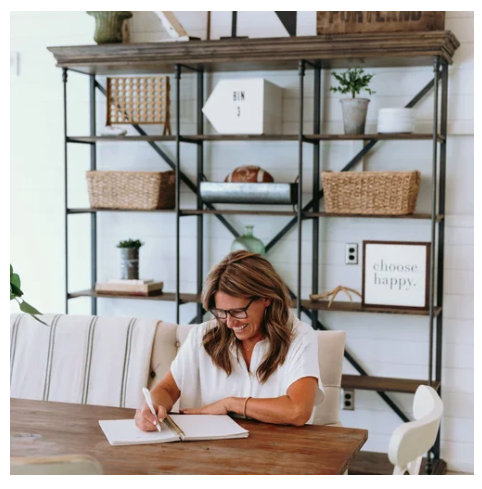
This is part 3 of my conversation with Kim Snodgrass of Rustic Home Organizing--if you missed the first two, hit the link HERE and go back to check out the first two.
In this one, we're talking about how you can (really, you can)--think about your obligations and your electronic life and make some changes.
You can listen right here by pressing play, or you can read the full transcript below!
LINKS FOR LISTENERS
Connect with Melissa and Pro Organizer Studio: CLICK HERE
If you are interested in our Inspired Organizer® program, you can find us at www.inspiredorganizer.com
We have a whole library of podcasts here, our YouTube channel, and you can find us on Facebook and Instagram at Pro Organizer Studio.
FULL TRANSCRIPT
Melissa Klug:
Okay, this is Part Three of my conversation with Kim. If you missed Parts One and Two, just flip back in the podcast feed. And if you are coming here straight from Part Two, I’m giving you a little recap—just stick with it for about 30 seconds in case you’re like, “Hmm, this is déjà vu.”
But I’m excited for you to hear this last part, where we talk about a billion things—so let’s get to it. Have a great day.
Melissa Klug:
So the word that I kept coming back to—I wrote it down—was obligation. I think that there are a lot of parts of what you said that are feelings of obligation: “I have to do this in order to be a business owner. I’m supposed to do this. I’m obligated to do this.”
Kim Snodgrass:
Yes. Right. And to add on to that—it’s not even just that piece. There’s also the piece of: “Okay, well, all the things tell me that I am capable of it, so therefore I have to do it.” Yes, you do not have to.
There’s nothing… I’m super capable of going out and running two miles right now, too. But am I going to do it? To hell I’m not. I hate the weather right now. I’m not doing it.
Just because I can doesn’t mean I have to, and it doesn’t mean I have to want to.
Melissa Klug:
Yes. I said that to my parents one time. My mom—this was a few years ago—was like, “Well, your father’s going to paint the house.” And I’m like, “Wait, hold the phone. That is a terrible idea.”
And she’s like, “Well, we can do it. Like physically, we can.” So she thought we should.
And I’m like, “Just because you can do it doesn’t mean you should.” It does not make it a good idea for a 78-year-old to get on a ladder and go up two stories.
And I don’t think we ask ourselves “why” enough. I think we’ve gotten to a speed—our attention spans are that of a gnat. We have no attention span anymore. We think we have to make decisions super quickly.
We don’t take the time to go, “Wait—why am I doing this? Why do I feel like I’m supposed to do X, Y, and Z?” I think we’re just like, “Oh, well, someone told me I’m supposed to do it, so I’m just going to go do it.” We don’t question anything.
Kim Snodgrass:
This goes back to when I said: okay, there’s also reality. One hundred percent. You’re a single mom and you have to make money—yes, you’re going to have to work. But just because you’re a registered nurse doesn’t mean you have to go back and be a nurse.
You might have a different calling. That might be tugging you, and you can explore it. It’s like we put ourselves in these tiny little boxes. The expectations we give ourselves…
And there might be some women listening who this doesn’t resonate with because they haven’t done that. And I think that’s amazing—keep up the good work. But for me, I didn’t do that. It’s not easy out there.
Melissa Klug:
I had a discussion with my husband the other day. I was trying to explain: I have a very nice life. You have a very nice life. We’re both very fortunate. We’re surrounded by good people. We have great kids, great partners, all those things.
But I was telling him, “I am super unhappy,” and there’s no identifiable reason—there’s nothing I can point to and say it’s 1, 2, and 3. But globally, 2025 has been a tough year.
And I think you can feel guilt about that. When people say “first-world problems,” yes. I use that phrase a lot. But there are times where you can say, “I’m very fortunate, but I am also not okay.” And you shouldn’t feel guilty about that.
Kim Snodgrass:
Couldn’t agree more. There’s a guilt that comes with that. “I should be grateful.” And I am grateful. But it’s also okay to be like, “Something still isn’t right, and I need to figure out what that is.”
There might be some things that you have that you shouldn’t have—and that could be causing it.
And I don’t want to dismiss anybody who has what appears to be a great life. I don’t want to dismiss their feelings at all.
And I’ve kept this generalized. I am an open book, so if there’s anybody who wants more personal details, I’m happy to share more about what I experienced this last year.
But to bring it back to organizing: I’m happy to report that Rustic Home Organizing is not going anywhere.
Melissa Klug:
I love that. I’m very happy about that.
Kim Snodgrass:
Yeah. And my family just calls me “RH.” They’re like, “Babe, RH, you can’t do that.” Or “Backstock Betty”—that’s my other name.
But RH is not going anywhere. And in fact, we are sitting in a studio that—yes—I dreamt up three years ago, and it’s finally finished. I moved into it a week ago.
The windows are still construction-dirty. I’m seeing the sun pop through and realizing, “Oh, I need to do that.” But you know what I’m going to do? I’m going to do it with a Christmas movie on in my studio. And it’s going to be amazing.
And I’m not going to do it on a rainy day. I’m going to do it on a sunny day.
Melissa Klug:
First of all, I’m excited that you found that spark again because I believe you have so much to say—so many important things to say about organizing. I would have hated to see that go away.
But I also fully embrace that there is a time and a season for everything. And if you were like, “I’m ditching the whole thing,” I would support you, because you know what you need.
But none of these things are black and white. You can say, “I’m in a season where I don’t really want to organize,” or “I have other things I’m working on,” and organizing isn’t what you’re drawn to right now.
Now, I have the ability to do that because I have another business. So again, we’re not trying to be unrealistic about people’s financial and life needs. But if you don’t pay attention to these things, everything will come crashing down. If you keep ignoring it, it will crash down.
Kim Snodgrass:
It will.
And luckily, I am in tune to myself, but I also hesitated. I thought about giving dollar figures, but I decided against it because my number might be a pipe dream to somebody, and it might also make someone think, “Oh, mine’s not that bad,” when maybe it is.
So I didn’t want people basing their situation off my metrics.
But I will say this: if you would’ve told me two years ago, “This is how much money you’re going to make in 2025,” I would’ve said, “How the hell can I survive? That’s not even possible.” And somehow I did.
Chad got fortunate—he had some great jobs and still does. And I had to stop overthinking it. I had to let it go.
Melissa Klug:
Everybody’s situation is wildly different. You’ve got to take things at your own speed and for your own needs.
But if you don’t listen to some of these things, you can end up in a worse situation—completely paralyzed and unable to do anything. And that doesn’t help you, your family, or anything.
And I know not everybody has unlimited resources. Not a lot of organizers have trust funds to fall back on or anything like that.
But at the same time, I want people to listen to themselves and realize there might be a time you need to take a step back. And that step back might include analyzing what is actually bothering you.
Because earlier you said, “I decided I hated organizing.” But it wasn’t organizing. It’s like I tell my clients: it’s not the stuff, it’s the stuff under the stuff.
For you, it wasn’t organizing. It was other things that made you think organizing was what you hated.
Kim Snodgrass:
My nervous system short-circuited. That’s what happened. And I could not process anything.
I even recall—and I’m still struggling with it—certain pieces of clothing I couldn’t wear. If I felt it in any way, I had to get it off me immediately.
I was so completely overstimulated—by the outside world, but also sound and smell.
We have a pellet stove that warms our house, and it makes a lot of noise—the fan. I had to turn it off for a week. I’m like, “I’m sorry guys. Everyone’s going to be cold. I don’t care. Everybody’s going to be cold. I can’t hear it.”
It made me want to scratch my eyeballs out—or yours. So you pick. What do you want?
Melissa Klug:
My daughter has diagnosed misophonia—certain sounds really amp up her nervous system. And it’s hard to explain because you’re like, “How can a sound make you want to punch someone?” But it can.
And we also can’t neglect perimenopause and menopause. There are health and age-related things going into this too. I have a lot of friends in my age range and we’re all talking about how differently we feel than we did five or ten years ago.
If you find yourself on the edge of unmitigated rage and you don’t understand why—hormones, you guys.
But also, we change as we age. And it’s not just hormones—it’s life stages. If you’re having your first kid… someone in our group just announced she’s having a baby, and I was like, “Oh gosh.” She’s in a totally different part of her life than I am.
You need to honor: why don’t I feel the same way I did ten years ago? Because age, and because a hundred other things, and because what’s going on in the world. We’re not very kind to ourselves.
Kim Snodgrass:
No.
And yes, there are battles going on in the world, but I also found that when I shut down my newsletters, shut down looking at any screen other than a dedicated Netflix Christmas movie—that helped too.
I didn’t have to see the battles, the keyboard warriors, all of that. It helped me calm down.
Melissa Klug:
So if people are avid podcast listeners, they’re probably like, “Melissa, you already said this,” but I’m going to say it again.
When I’m scrolling, it’s not even that I’m scrolling bad news. My algorithm can be feeding me great, lovely things. And then my brain goes:
“Oh man, I should be growing my own broccoli. What’s wrong with me that I don’t have a garden? I need a raised bed. Why am I not growing wildflowers for the bees? I haven’t seen enough national parks. I haven’t traveled to enough countries…”
Even good things can impact us negatively—FOMO, shoulds—it’s not good for us.
Kim Snodgrass:
Mine is similar. When I started making sourdough, I found myself thinking, “Oh, maybe I need to put a stand at the end of my driveway and start selling.”
And I stopped myself: “Kimberly, stop. This is not what this is about. You’re doing something because you enjoy it.”
As entrepreneurs, it’s like, “Wait, I can start that business. Oh, and I can start that business.” Be cautious.
It’s okay to do something just to do something. Even if you’re amazing at it and the world could use your talent—too bad. They can become your friend.
Melissa Klug:
It’s nice to be relied upon. As an Enneagram Two people-pleaser, I enjoy helping people so much.
But in our profession, we have a lot of people who need us. Clients can have high needs. Parenting—whether it’s a two-year-old or a 22-year-old—is a lot of work.
And when all these people need you all the time, it can feel heavy. If I’m not taking care of myself, I get exhausted by everyone else’s needs because I’m not meeting my own.
Kim Snodgrass:
Yeah. And I’m wearing camo today because I’m hoping my family won’t find me.
So far, so good. I think they forget the studio is up and running, and I’m like, “This is awesome.”
This Christmas—my girls won’t admit it, but I’m their favorite person and they require a lot of me. When Courtney comes home from Boston, it’s kind of a show. Seven days of “on.” That’s a lot.
They wanted to go into town, and Chad and I just don’t enjoy it anymore. And I said no. I stayed back, Chad stayed back, and the kids went by themselves.
I did it for two reasons: (1) I didn’t want to, and (2) I didn’t want to pay the bill.
That’s the first time I’ve ever done that with my kids. And they were fine. A little taken aback at first, like, “Oh—what?” But then, “Okay.”
Melissa Klug:
Sometimes I’ll pay the bill just so I don’t have to go. I’ll be like, “Here’s my card, but I’m not coming.”
And I’m sick of the word boundaries, but that’s what it is—guidelines. Your own personal guidelines.
And just because you said yes the other thousand times, the first time you say, “Nah, I’m not into it,” that’s okay.
We’re recording this on December 30th, screaming into the end of this terrible year. I’ve been thinking about 2026—not New Year’s resolutions, but a reset.
I hate “new year, new me.” The old me was great. I don’t buy any of that. But I’ve had a tough year. I’ve felt burned out. I did a podcast about burnout.
And I realized I need to do the hard things. And it’s sad that these are “hard,” but I said out loud to Cabri that I’m thinking about deleting all my social media. And she said, “Oh my gosh—just you saying that makes me feel nervous.”
It makes me nervous too. My brain goes, “What if all the important news is on Facebook and I’m not on Facebook anymore?” Or I’ll miss memes or whatever.
I waste so much time in empty scrolling under the guise of “educating myself” or “keeping up with organizing” or “business coaches.”
What am I going to miss? Pressure.
My attention span is gone. We were on the couch watching a show—all four of us on our phones.
Kim Snodgrass:
That’s kind of sad. It is sad.
Now that I’m not on my phone, my family will text Chad because I don’t even know where my phone is. It’s not something I keep with me anymore.
But I’ve noticed when I sit down on the couch, they’re starting to set their phones down. Otherwise, they’re on their phones and I’m just sitting there. And it feels rude.
Chad immediately sets his down, but the girls have started too. I noticed that in the last few days.
Melissa Klug:
My kids called my husband “screenager” the other day because he wasn’t paying attention while he was scrolling.
And to be clear: his entire TikTok feed is sports and dog videos. That’s it. Nothing important.
It’s not just kids—it’s all of us.
I took a trip to Europe, and I hope my mom doesn’t listen to this. I posted a few photos to Facebook three days after I got there, and she commented, “Oh, I was hoping you’d post pictures on Facebook.”
And I’m like, “You could just text me. I’m related to you.”
But in her world, if it’s not on Facebook, it didn’t happen.
So I’ve decided I’m going to do the hard thing. I haven’t committed to an amount of time, but—
Kim Snodgrass:
Do what feels good. For me, I didn’t delete them off my phone. I just consciously… I don’t care anymore. So I don’t look at it.
Melissa Klug:
I have to delete them off my phone because I know me. I’m on or off; moderation doesn’t work for me.
I also ordered “the Brick”—that thing that turns your phone dumb.
And I asked myself: why am I so scared to do something like this?
We feel like we have to be on social. If I’m not on Instagram, I won’t know what’s going on.
Kim Snodgrass:
For me, something I still struggle with as part of this nervous system reset is: “Oh, this is good content. I should be filming this. I should post this.”
I’ve been oohing and aahing over the studio for years. I posted all the progress. I have yet to post a finished photo because I don’t care what—I don’t care anymore.
Melissa Klug:
And I do that too. I’ll take a picture like, “Oh, good content.” And by the way, I almost never post on Pro Organizer Studio Instagram anymore.
But we feel that obligation: “I have business social media, therefore I should be creating content.”
And Instagram changes every day. How many people even see it? It’s a small percentage. But we still feel the push.
Kim Snodgrass:
There are so many shoulds. For a long time I enjoyed social media, but I got to a point where it no longer served me. It’s okay to change your mind.
Melissa Klug:
And you’ve known you’re impacted by comparisonitis.
Kim Snodgrass:
A hundred percent.
Anything that doesn’t serve me anymore, I unfollow or mute. It’s not about them—it’s about me. And if I catch myself clicking and clicking, it’s: “Nope. You’re done. Put it down.”
Melissa Klug:
Something funny has been happening: my algorithm has been serving me stuff about nervous system resets and dopamine addiction.
There’s one guy who keeps coming up with good scientific info, like how watching TV while scrolling is double dopamine hits. Good info—but he’s still posting it on the app we’re addicted to. So even “good information” is still in the system.
We don’t have to be on the hamster wheel.
Kim Snodgrass:
Nope. You can politely exit. Nobody will know. Sorry guys—nobody cares.
Doesn’t mean they don’t like you. It just means you’re not in the forefront of their minds.
Melissa Klug:
I’m trying to go into 2026 with slower living. I’m constantly in a heightened state of anxiety about a million things, and I can’t do it anymore.
Kim Snodgrass:
Yeah. Money is not my driver this year. Feeling good about the things I want to do—that’s important.
And again, there are things we have to do that we don’t want to do, but we don’t have to do them forever. Sometimes we power through, but we can use it to figure out what we do want to do.
Melissa Klug:
That truly fills your cup.
And I want to remind people: when you hit a point like this, it’s not black and white. There are a lot of options.
If you’re tired of organizing, are you going on every job? Could you get support? Expand how you’re thinking. It isn’t just “I’m never organizing again.” People with teams might want to go solo again—you can.
You can do whatever you want.
Kim Snodgrass:
Yes, you can. And my clarity coach advised me—when you decide you’re changing something up, quitting something, whatever—you don’t have to make a big announcement.
Nobody cares. And if they care, they’ll reach out and ask, and then you can tell them.
When you make a big announcement, you close a door. And then if you decide to go back, you feel silly.
If you decide you don’t want to organize anymore, don’t organize. You don’t have to delete your Instagram. You don’t have to do anything.
No one person has known what I’ve been going through, or that I didn’t want to be an organizer for a while, and I’m so glad I didn’t say anything.
Don’t close doors to yourself. It makes you come back with your tail between your legs, and you don’t want that.
Melissa Klug:
You can’t unring the bell.
One of the things I saw on the internet this year in the organizing world that I hated more than almost anything was: “I’m so sorry, I made your house perfect.” No.
Kim Snodgrass:
Oh, that one drives me nuts.
Melissa Klug:
There was also someone making a multi-part announcement about raising their prices with all these justifications—and it wasn’t done well. And I’m like: you don’t need to announce raising your prices.
People ask, “Should I announce a rebrand?” No. Nobody cares. “Should I announce changing prices?” No. Nobody cares.
We don’t need to make a federal case out of these things.
Kim Snodgrass:
Underlying, I think people aren’t admitting why they’re doing it. They’re looking for attention and hoping it brings them business.
Melissa Klug:
That’s not how you get business.
But your point stands: nobody is paying attention as much as you think they are. So just do the thing. You don’t need to announce it.
If I disappear off social media, people who really know how to find me will find me.
Kim Snodgrass:
I’ve posted two times in the last three months, and I guarantee not one person listening knows that.
Melissa Klug:
Because it doesn’t matter.
So… what are you most excited about for 2026?
Kim Snodgrass:
I’m most excited to continue this reset. It feels good. I’m learning so much about me. I’m learning that our bodies are amazing if we let them do their thing.
I’m excited to continue to feel better and more secure in what I want and who I am.
Melissa Klug:
I love that for you. And I love that out of a tough year came some really good things. I hope it continues.
You’re truly one of my favorite people, and I would say that on or off the podcast. I care very deeply.
And I want people to remember: there are always people going through things. If you think you’re alone—if you think everyone else has it dialed in—they don’t.
I think more people are in our boat than on the other side. Lots of people are having a hard time right now. It’s kind of a hard time in the world. So don’t assume no one else is struggling.
Being vulnerable about it helps people realize they are not alone.
Kim Snodgrass:
When we first started talking back in 2021, if you would’ve told me this is what I’d be talking about going into 2026, I think I would’ve been embarrassed—because I wasn’t an organizer with a van with my name on it, a warehouse full of product, and a team.
And there’s a place for that. There’s a clientele that wants that.
But automatically putting ourselves in that box as whether or not we’re successful can be dangerous.
As much as some things have been hard, I’m happy I’ve gone through what I’ve gone through. I still don’t regret starting a business.
It’s given me flexibility and freedom I wouldn’t have had otherwise. It’s allowed me to process things I didn’t realize I needed to process. It uncovered things I didn’t realize needed to be uncovered in my blackberry bushes of hell that I was silently hiding in.
Kudos to the organizers who have their business stuff together—that is your superpower and that’s awesome.
And I want to encourage those who don’t feel like that’s what they want: that’s okay.
Melissa Klug:
There’s no better note to end on.
In the past, I’d ask, “Where can people find you on the internet?” But today I’m not going to do that because we’re just going to leave you alone. That’s what we’re going to do.
Kim Snodgrass:
You’re just going to leave me alone.
I do still check messages. People will listen to a podcast and reach out, and I’ll respond. But I’m not on there a lot right now. Maybe I’ll hop back on someday. I don’t know. But in the near future, I’m not hopping back on.
And my last reminder: don’t be afraid to unsubscribe. Don’t be afraid to not listen to stuff. Don’t be afraid to shut it down.
Sit in the quiet.
Don’t be afraid to listen to jazz. That’s my new thing—French café jazz. Oh my gosh, it’s amazing.
Don’t be afraid to put the phone down. Don’t be afraid to not check your email. It’s okay. It’s going to be okay.
You don’t have to read the book. You don’t have to subscribe to the… just—it’s okay. You’re smart. Listen to yourself.
Melissa Klug:
Let go of the obligation and the FOMO and all the things, and just concentrate on what’s good for your brain and your life.
Kim Snodgrass:
Set your guidelines.
Melissa Klug:
Yeah. I love that.
I have appreciated every single year, no matter what you have shared. You’ve shared the good, the bad, the ugly, the very ugly.
I always appreciate your honesty and transparency and vulnerability. I appreciate you very much. And I know you help people, because they tell me and they tell you. I think this is going to be really impactful.
Kim Snodgrass:
I appreciate that, and I appreciate you letting me blab, because you know I do have something to say.
Melissa Klug:
It’s like therapy—only I’m not certified to give any advice.
Kim Snodgrass:
My team is. I have a team of certified professionals helping me.
Melissa Klug:
If nothing else, you’re going to inspire me to make an appointment with my therapist, because I need to see her.
Kim Snodgrass:
Yes. Full transparency: I have a primary care doctor, I have an ADD doctor, I have my clarity coach, and I have my counselor. And all four of them can speak to one another. Literally, I have a team.
Melissa Klug:
Oh, I love that. They’re truly a team.
Watch out—I don’t want to make a team. I thought I was going to have a team, but it’s a different team than I thought would be assembled on my behalf.
But I don’t want to make any promises… I think 2026 might be the year I actually get diagnosed with ADHD. We’ll see what happens there.
Keep me posted.
I can say this—and I’ll delete it if you want me to—but one of the times we were talking, you literally said to me, “Hold on—when did I take my ADD med?”
And I was like, “Okay, whatever you need to do, girl.”
Kim Snodgrass:
Totally. Now I’m a little more regulated. Now we’re all good.
Melissa Klug:
Yay. I’m not crazy.
Well, I’m glad you have a team. I’m glad to be a teeny part of your life and your team. And I know everyone really appreciates you being here.
So thank you, Kim.
Kim Snodgrass:
Well, thank you, Melissa. I appreciate it. I hope this helped you like it helped me.
Melissa Klug:
I loved having this conversation with Kim. It made me think about a lot of things in my own life—both business and personal—and I hope it did the same for you.
Thank you for listening, and thank you so much to my dear friend Kim for being here and being so open and caring, and for being able to share the difficult parts along with the great parts of business ownership.
I hope that you have an absolutely fabulous week, organizers, and I will talk to you soon.
CONNECT WITH PRO ORGANIZER STUDIO
We’d love to work with you. Send us an email (Melissa answers them personally!) or connect with us HERE…or check out our programs HERE.
If you’d like to watch our FREE seminar, The Pro Organizer’s Profit Plan—check it out here!