

245 | “Sometimes entrepreneurship is just…accidental.” | Building a multi-6-figure business with Cabri Caldwell
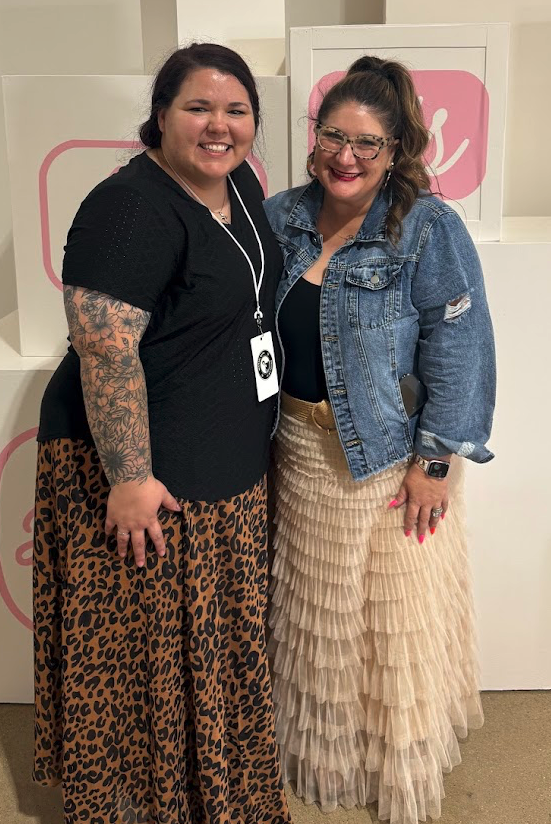
Cabri breaks down how her own team happened “by accident,” why teams can be a game-changer for revenue and sanity, and what the hard parts really are (hello, cash flow + people problems).
If you’re thinking about hiring—even just a VA—or your current team needs better systems, this episode is your sneak peek into what’s coming next.
You can listen right here by pressing play, or you can read the full transcript below!
Or if you prefer YouTube, we’ve got you covered HERE!
LINKS FOR LISTENERS
Connect with Melissa and Pro Organizer Studio: CLICK HERE
We have a whole library of podcasts here, our YouTube channel, and you can find us on Facebook and Instagram at Pro Organizer Studio.
FULL TRANSCRIPT
Hey, pro organizers. This is Melissa. I already recorded this beginning part of the podcast and it turns out that I didn’t hit record. So in case you want to know what kind of day I’m having, that is pretty much it.
So this weekend I went away with my bestie from college. We were celebrating a milestone birthday for her—one that I celebrated last year.
And my daughter, who is at college, FaceTimed me while we were there. She was with one of her best friends that she’s made so far this year at college. And we were talking about how, oh gosh, I’m with my college bestie and—cough, cough—maybe 30 years from now, it’s hard to believe it’s been that long, but it has. You’ll be somewhere with your friend that you’re sitting with right now, and it’s just fun to think about those people.
I’m so fortunate to have people in my life that have been there for a very long time, and I’m also fortunate to have some people who are newer to my life in terms of the number of years that I’ve known them. But the closeness that we have and the connections that we have—you just know it’s going to be someone that 20 years from now, I’m still going to be keeping in touch with, even if I am retired and off into the sunset.
And Cabri Caldwell is that person for me.
Cabri has been on our podcast many times, but this is an official announcement. Just like I came into Pro Organizer Studio as someone new in 2020, I am bringing Cabri in. She’s actually now a partial owner of the business. So she is officially my business partner in Pro Organizer Studio.
And if you’re wondering like, okay great, that’s wonderful for you, why is this important to me?
The reason it’s important to you is that she is going to be helping bring on new programs, new things for you. She has a billion ideas, like—and they’re all really great ideas. It’s actually hard to pick through what we’re going to be able to do and what we aren’t, but she’s just super energizing and energized.
She is just one of the most passionate entrepreneurs that I know. Okay. She has an organizing business that grosses well into the multi-six figures every single year. She has several other businesses that she has started—some organizing-adjacent and some totally different. And she’s just a really passionate business woman.
And one of the things that she is super passionate about is having women make money, and I think that’s incredibly important.
There are a ton of things you can have as your goal for your organizing business. It does not have to be financial. But I do think helping women have profitable businesses that will allow them to do fun things in their life, or important things, or things for their families, support other families—any number of things—it’s crazy important.
So Cabri is a huge part of Pro Organizer Studio, and in this podcast we’re really talking about something new that we are launching. And it’s very much about her success as a team owner for her business, Minimize Then Organize in Lubbock.
And we are talking about Inspired Organizer TEAMS, which is something brand new that we are launching.
And if you are interested in getting more information as you listen, you can hit up proorganizerstudio.com/links for more information.
And I’m just thrilled to have you here about Cabri’s journey as a team owner and moving from the solopreneur to the CEO role, and growing that business and really making sure that she’s taking herself out of the business, which is a key part of being a team owner.
And I’m super, super excited to have her on. I’m thankful to have Cabri. I think you are going to be thankful to have Cabri too.
And let’s get started with the podcast today. Have a great week, organizers.
Melissa Klug: I don’t have my act together today. That’s all there is to it. So we’re just going to podcast. We’re just going to put it together.
Cabri is back. So I put up a mini episode the day that we’re recording this, and I was teasing that we were doing this episode, and I said—I called you my co-conspirator. Is that—how do we feel about that?
It’s about accurate. Yeah, it’s about right.
Yeah.
We have something that is new and exciting that we want to talk about. But you and I are taking over something new for Pro Organizer Studio and we’re excited—
Cabri Carpenter: We’re very excited about it.
And this is honestly something that has been on the to-do list for way longer than we should probably even admit out loud.
Melissa Klug: It has, but now we’re doing it.
Sometimes it just takes a while to get someplace, right? We have a lot of things that we do and we have a lot of stuff that we put out into the universe, but we’re like really excited about this because I think it gives us a holistic view of everything that’s going on in the organizing industry.
So what we are talking about is we are thrilled to be taking over Kate Waldo & Co.’s teams course.
So let me just give people the five-second background. In 2020, I started at Pro Organizer Studio, and in 2021 I worked with Kate on developing a teams course because I, as someone who always says I am solo organizer by choice, we have to recognize when we do not have all the expertise.
And so we go to the experts. And Kate had five teams in five different cities in multiple states. And so she was the natural person for us to go to and say, “Hey, build this course.”
Kate has gone on to do lots of other entrepreneurial things, and she has realized that she really wanted the teams course to live with us at Pro Organizer Studio.
And so Cabri and I are taking it over. Mostly Cabri, but me too.
Cabri Carpenter: Melissa’s definitely in there.
Melissa Klug: And one of the things I love about entrepreneurship is you can say there are different seasons for things in your life.
And there was a season that we wanted to say, “Hey Kate, could you take the team stuff and run with it?” And that worked for her business and it worked for me.
And then her business has changed a lot. She is into a brand new business with her husband. And she realized it made more sense to have it with us, who are working with organizers every day.
And obviously people growing teams, people building teams—whether that is one assistant or whether that is five businesses in five different cities—we want to be able to grow with everybody in our group.
So we’re just so excited to be relaunching all of the team stuff.
Cabri Carpenter: It’s going to be a lot of fun. And I can’t wait to share all the updates that are coming.
Melissa Klug: And I have very incredibly smart people around me who run amazing teams with six-figure incomes, such as yourself, that we want to be able to harness all of their knowledge as well.
Cabri Carpenter: You okay? I have a dog choking in the backyard.
Melissa Klug: Do you want to go check on that?
Cabri Carpenter: She’s upright. It’s fine. Okay.
She literally just came into eyesight and was like doing the whole thing, and I was like, I think I might just leave that in and not edit that out so people know.
But it’s— to record a podcast when we’re like squirrel—literally—it’s never normal.
I don’t even know what you asked me. I got so distracted instantly.
Melissa Klug: Okay. We’ll just say we’re thrilled to do this. So we just want to talk a little bit about what we’re going to be doing, what we’re working on.
But we are fully relaunching Inspired Organizer TEAMS.
Tell me about your journey with teams.
Cabri Carpenter: It’s crazy accidental. Some people have a very nice well thought out plan when they’re like, “Oh hey, I want to start a team.”
That did not happen for me. That was absolutely not the case.
Melissa Klug: I don’t think any—lemme just jump in and say, I’m going to be honest. I don’t think anything in my business has been on purpose. So if your journey to a team was not on purpose, I totally get that.
Cabri Carpenter: And I was even probably one of those people that back in the day, I was like, “I don’t want a team. I love organizing. I’m going to do it all by myself.”
And now I’m like, I don’t even recognize that girl anymore.
Yeah.
Melissa Klug: Do you even remember a time that you did this by yourself? Like seriously, because your team—I have the privilege of knowing some of the people on your team personally, and they are lovely. Like lovely, fun, wonderful people.
Can you even imagine the day that you did this by yourself?
Cabri Carpenter: No, it’s hard to think back.
And there’s even times now that I will go to a client just to wrap up a project, or just we’re shorthanded and I just need to be there by myself or whatever, and I’m like, I forgot how hard this was.
Yeah. Like it’s exhausting. It’s mentally and physically exhausting.
And yeah, no, it’s definitely—I’m reminded occasionally, but no, I do not remember doing all the things by myself because it just—I don’t know. I probably have blacked it out of my memory from PTSD.
Melissa Klug: I know a little bit about your story and I know Kate’s story. I think your story and Kate’s story are very similar in terms of that epiphany moment of “I need to start a team.”
So what did that look like for you?
Cabri Carpenter: Yeah, so it really was an accident, essentially.
Let me back up for two seconds because it’s more than just a team.
So I joined Inspired Organizer in 2018. Felt like I got the ball rolling closer to 2019. I still to this day say that Inspired Organizer is how I made as much money as I did. That wasn’t me. It was all the things that I learned through Inspired Organizer.
And there was a slight pause around 2020, just COVID and all the things going on in the world.
And then late 2020 is whenever I had someone approach me and they were the ones that were like, “Hey, you want to come part-time?”
And I was like, “Oh, I don’t know.” Like, we’re coming off a really rough year and I don’t know if I have time for a team or I can add to a team or pay a team right now.
And then just magically, like it always does, I had an earth-shattering moment.
We had a client who was moving and it was a gorgeous million-dollar home, and I had a three-month timeline and everything was rolling smoothly.
And then she called and said, “Oh hey, by the way we have to be out in two weeks.”
And I’m like, I can’t do it by myself.
It was also two hours away. I was driving back and forth, staying in hotels—
Melissa Klug: Oh, also that just casually.
Cabri Carpenter: —staying in hotels, trying to get stuff done as needed.
And very quickly I was thrust into: okay, it doesn’t matter who I need to hire or what I need to hire, like I just need people.
But then this is the thing: it’s a very slippery slope, and it’s almost like a gateway drug.
That first time that you’re working with a team and you’re realizing, “Hey, I don’t have to carry the burden. I don’t have to carry all of the conversation. I don’t have to do all of the physical things by myself.”
That carrying the burden—literally and figuratively—like yes, literally in taking things out to cars or whatever, but also, yes, not having to take every single thing with the client on.
And I don’t consider myself like super extroverted, honestly. But it was just nice to be like, “Okay, go through your kitchen stuff with this person,” and I got to walk away and be in silence for, you know, got a minute, 30 minutes.
Like it wasn’t anything overly exciting, but it just mentally, it really helped me.
And so of course, like we got that client taken care of and everything was fine. And then I sent her the invoice and I was doing all the math in my head and I was like, “Oh, I understand now. You can make money. You can make good profit by having a team.”
And so then it really did become the gateway drug, because now I can’t imagine life any other way. And I don’t want to. I don’t want to be on clients’ projects by myself all the time alone. That’s no fun.
Our team is fun and they’re a fricking hoot.
Melissa Klug: Your team is fun, like honestly.
And so if you go to Cabri—so Minimize Then Organize—if you go to their social media, like you can tell. And I would like to say, I know these people in person, in real life. They are just as fun as they appear. Like things in the mirror are the same size as they appear on—they’re so fun and their enthusiasm is infectious.
And I know that from—and that’s not just you, that’s not just your team, right? Like I know a lot of organizers, I have a lot of friends in organizing, and their teams are genuinely lovely people.
It’s not to say that you’re not going to have issues. It’s not to say you’re not gonna have conflicts that come up and that type of thing. But in general, the people that are attracted to this business are really great people.
Cabri Carpenter: Oh, 100%. I agree. Yes.
I am super lucky to have like cream of the crop. I have the best team. Yeah, I’ll stand on that.
Melissa Klug: But let’s talk a little bit about—’cause there are a lot of ways to, like, when we talk about having a team, there are so many ways that happens too.
It can be that you’ve got one person that’s just your assistant. It can be that you have multiple people going out to multiple projects. Like one of my friends has teams on three different projects today in the Twin Cities.
There are a lot of ways that teams come about.
Tell me a little bit about your progression with—did you just jump all into a ton of people, or did you do the one person at a time?
Cabri Carpenter: No, I am definitely like a stick-your-toe-in, test-the-water kind of person.
And I have to gear myself up, but then also gain the confidence to continue on, which is funny because I feel like I teach that. Like I always tell people like, “Raise your prices.”
And they’re like, “I can’t raise ’em 20.”
And I’m like, “Five bucks.”
Melissa Klug: Yeah, five bucks. Little bit now, five bucks later—it all adds up.
Cabri Carpenter: I did the same thing with the team.
My sister actually was one of the people that came on that large ginormous job with me, just literally needing warm bodies—people that I could trust, people who I knew could be in a million dollar home and not make a scene or make it awkward or weird.
And so she got thrust into it.
I think my mom—I hired my mom at some point—but then you’ll find this hilarious: I also had to fire her.
Like I love her, but it was not healthy for our relationship. And so we—we still laugh about it to this day. It was—
Melissa Klug: You are not the only person that I know who has hired and fired their mom.
Yeah.
Cabri Carpenter: She is way more organized than me, and I think that was our problem.
Yeah, it was a problem.
But my first like true real hire was Lara, which I’ve talked about her on here before. She’s my right hand. I swear we share a brain cell some days because like we’re just in rhythm all the time.
But she came on and it was very subtle. So she came on part-time, like two days a week.
And then after about a month she’s, “Okay, I think I’m ready to leave my other job and do this full time.”
And I was like, “Oh God, I don’t know if I can sustain work.”
Melissa Klug: Yeah. You’re like, “Wait a minute. That’s a me problem now.”
Cabri Carpenter: It is. It is a me problem.
But it was a good challenge and it all worked out.
And so from there it was another little subtle shift where she was taking photos after a project one day and she was like, “Would it be okay if I post this to social media?”
And so then she accidentally made herself like our social media person.
Melissa Klug: Yeah.
Cabri Carpenter: And then we started getting busier. We started getting busier, and I then realized I did not have enough time and energy to be in the business delivering on clients’ projects, but also be working on the business to sustain a full schedule for our team.
And so I started to pull back some. We hired someone else to take my place.
And so now we have a team of—it depends ’cause I still have a couple of floaters who come in and out—but four to six.
And I think that’s our sweet spot. I don’t know if I would want three teams across our area, in our service area.
I also don’t know if I want a team in another location. Like it’s been an opportunity and it’s been brought up multiple times, but I’m partial to Lubbock and we have a really sweet community here and it’s special and businesses thrive and I just don’t know if I could replicate it somewhere else.
And so I think we’re in a good spot right now.
But it has not been easy. And y’all are getting the snapshot of the last five and a half years.
So yeah.
Melissa Klug: You just are explaining in three minutes what is many years of hard work and lots of—
Cabri Carpenter: Trial and error.
There has been a lot. I’ve never—I’ve never claimed to have done it the right way. I’m sure I have made a lot of mistakes along the way, and there’s a lot of things that I had to go back and be like, “Oh, just kidding. Rewind. Pause.”
But it’s been good. And I still like—I will forever be an advocate of teams. It’s been fabulous to watch our team grow. It’s been fabulous to see profitability scale, like as a business owner.
Melissa Klug: And so I love it. It’s my favorite.
Tell me a little bit about the profitability front, because that is—there, there is a reason to start teams from a structural work standpoint. Getting the work done, getting it done more efficiently, getting it done for the client, more efficiently for yourself, for all the things.
But there’s a very real profitability play as well. This is definitely how you scale an organizing business to be successful is by profitability.
So can you talk a little bit about what that has meant to you?
Cabri Carpenter: Yeah.
So I—and I didn’t come from a business background. This is the first business I owned. I didn’t know what that looks like. I didn’t understand it.
And so it wasn’t till I actually hired somebody and then charged them like, “Oh hey, times two,” because you got two of us.
Yeah.
And then I saw very quickly, “Oh hey, by the way, I’m not paying them what I’m charging clients, and I get to profit all that extra money.”
That was the game changer for some of the stuff.
That profit and those numbers that we were able to pro-produce—that’s why we have a warehouse. That’s why we get to do donation drives. That’s why we get to give back to our community because we’ve built in so much cushion in that number.
It’s why my team gets badass bonuses and I’m not scared to say that. Like they hustle and they do amazing things and they have fully earned that money. Like it is not mine. It is theirs.
But the profitability piece is crazy. ’Cause you can go from making—where you’re feeling like you’re trading time for money and only making $75 or a hundred dollars or whatever—to, “Oh my God, I am making $600 an hour with all of the people.”
The math behind that is insane.
And I don’t know, it’s a huge piece of why I feel like we’ve been able to grow and scale and reinvest into marketing and grow our team and give bonuses and give back to the—it’s been a game changer. It’s huge.
One of the most important pieces I think that I could not have done as a solo organizer charging a hundred dollars an hour by myself.
Melissa Klug: Yeah.
And you do so much, and this is probably for another podcast, but you really give back to your community. I would actually love to talk to you another time about these donation drives and other things that you do to really help your community.
But your point is solid is it allows you to do those things because you have these clients that are paying a premium for working with your team.
And it has also enabled you to be able to buy other businesses, which is exciting too.
Yes. You have expanded beyond just organizing to do a lot of other things, and that I assume, as an entrepreneur, is really fun for you.
Cabri Carpenter: It’s—it is.
And it’s even—it’s more fun that our team also gets to see that and also reap the benefits of it sometimes.
So because, like we’ve talked about it, our rental boxes—we use them more on the organizing side than the business itself produces. Like we are our biggest customer.
And they also get kickbacks, like whenever we book a job and they convince our clients, “Oh hey, let’s use these boxes instead.”
I’m like, “Here you go. Here’s your referral fee.”
Yeah. Which is awesome. It all expands.
And then yesterday I sent a message—we have someone on our team who again, like accidentally fell into essentially doing laundry for some of our clients.
But unlike some laundry services where they just leave it on the front porch in a bag, she has actually been in their homes, put their kids’ clothes up, had it sorted, had it color coded, made sure everything was folded the same.
And so she ended up doing that for our clients.
Now it’s growing and I’m like, “You want a website? You want to invest some money? That’s a business. Yeah.”
“You want some Google ads?” Because I don’t mind—I don’t mind being a silent financial partner in that if that’s where you want to go and it’s something that you can own on your own.
So I don’t know, the profit piece is huge because I literally would not have been able to do all the things without it.
Melissa Klug: Yeah. I think that’s awesome.
Gallery View & Screen Share: Yeah.
Melissa Klug: Is there any part of—or let me ask you this—what are the hard parts for you of running a team?
What are the things that keep you up at night? What are the things that kind of are the tougher part that we’ll be talking about in this course?
Cabri Carpenter: Oh, okay.
This is—this applies to all business, but specifically when you are taking on the responsibility and the liability of providing for other people and their families—the cashflow piece.
Like it does not take a lot for cashflow to fall apart.
For one person, that’s, “Oh hey, my card got declined. It was flagged for fraud. I’m gonna pay that invoice when I get my new card next week.”
And you’re like, “Great. I can’t make payroll.”
Gallery View & Screen Share: Yeah, that’s—
Cabri Carpenter: One of those hard things that—for the first couple years—that ate me alive.
And so at some point I started—it’s a lot of responsibility.
And when you think, “Oh hey, by the way, I can’t make payroll,” and these people then can’t pay their bills or buy groceries or whatever they need to do to sustain life and live—yeah, it’s a big burden.
And I don’t think that it’s one that should be taken lightly.
I definitely at some point decided, I’m like, “I just need a banker. I need a business line of credit. I need something to ebb the—ease the flow whenever these little tight situations happen.” ’Cause they—do you have someone who doesn’t pay an invoice, or you have way more product but you can’t get it returned on time, or—it just—the little things happen.
I struggled a lot on the financials and the cashflow side for a long time. Decided I was not going to keep putting myself through that turmoil.
And so just got a relationship with the banker and line of credit just to make sure that didn’t happen again.
The second hardest piece is just people are—we’re humans. We have emotions. We have big emotions. People—we have big feelings.
Yeah.
We have things like sometimes you have disagreements. Sometimes you have personality conflicts. Sometimes it’s within the team. Sometimes it’s with clients.
And that is a very fickle situation that you have to carefully handle.
It’s like walking around with a grenade in your hands because one wrong move and the whole thing gets set off.
And so people are the hardest part, but they’re also the best part.
And I’m super grateful to have amazing people who—I don’t have to worry about the people aspect with my team. I have to worry about clients.
I have to worry about respecting my team, but also protecting them.
If we have a hard client or a challenging client or rude clients even. And like I—I go into full mama bear mode to where I’m like, “Do you want to fire that client? You don’t ever have to go over there again if you don’t want to. We can just fire them. I’ll send them an email.”
Melissa Klug: Yeah, and of—
Cabri Carpenter: Of course. Like, our team’s great. And they’re like, “No, we can work with them again.” But I’m like, you don’t have to. And it’s my job. It’s my job to protect you from those people if they really are that big of an issue.
Melissa Klug: Yeah, people are hard.
I think that the people piece—the team member and client relationship and the issues that can come from that—can also go both directions. It can be you have a team member that’s having a really bad day and that becomes client-facing. You don’t want that either, but we all know: some clients are more delightful than others.
Cabri Carpenter: Oh, yeah.
Melissa Klug: And sometimes that can be—and being in charge of that and saying that you’re going to have to make some of those hard decisions about, “This might be a $10,000 project and we are not going back because of X, Y, Z,” all the ten reasons.
Yep. All of those are things.
And I think what you’re really getting at is something that I have seen a few times in the work we do in Inspired Organizer is there are people that have a really hard situation with a team member or multiple team members, and they really don’t want to solve it because they don’t want to be confrontational.
And I just—the only thing I will tell you is, as someone who has managed people in my prior corporate life, you have to be ready for those hard conversations. If you are not ready, you’re not ready to have a team. Is that fair?
Cabri Carpenter: Yeah. I do think that’s super important.
I have probably not handled all of my difficult conversations the way I needed to. But this is also one of those—entrepreneurship will be the biggest learning lesson and the biggest—it’s so personal and it’s so deep and like you can’t get this through therapy. It’s deeper than even that. Like, it’s going to change who you are.
And there’s been a lot of growth there, which I’m grateful for, but I also look back at the last eight years in business and I’m like, “Oh my God, I made so many mistakes.”
Melissa Klug: Oh yeah. We all do.
That’s the thing is like you—I don’t think you can be an entrepreneur and not have made a hundred thousand mistakes.
I just think that there is a special level of person—like in order to run a successful team, there are some qualities you have to have. Yeah. And you also have to know yourself.
Cabri Carpenter: Yes.
Melissa Klug: And like I know myself, and so that’s why for me, I have felt differently about growing a team because I know myself.
Cabri Carpenter: Yep.
Melissa Klug: You have to know yourself to know whether that’s something that works for you or not. And having hard conversations is absolutely a part of it.
By the way, you can be a solopreneur and have hard—hard—and need to have hard conversations. It’s not like they don’t exist, but I think especially when you’re running a team, you have to be prepared for some of those challenging times.
Cabri Carpenter: Yeah, it’s definitely a little more difficult when you’re playing Tetris with the emotions and all the—for sure. The human aspect of it.
Melissa Klug: Yeah.
I do remember very distinctly—I maybe shouldn’t tell this story, but I’m going to—there was someone years ago in our group who said, “I have a team,” and this was an employee, not a subcontractor.
And she said, “This person has been a problem. I think I’m just going to fire her.”
And I just said very simply, “What conversations have you had with her about the things that she is doing that you don’t like?”
And she goes, “Oh, I’ve never had a conversation with her.”
That’s a problem.
Yeah. You can’t—by the way, you’re welcome to hire and fire as you please, but you have to be prepared to have those difficult conversations.
Cabri Carpenter: And as we’re talking about this, I also realize that I am incredibly lucky because I have not had to have any—very many—hard conversations.
Melissa Klug: That’s awesome.
Cabri Carpenter: That makes you highlight—and when I’m looking at overall just like the course of business and all the things that we’ve done, like I’m incredibly grateful.
I know that there’s people who talk about it in the group of like, “How do I approach the situation? How do I do it nicely? How do I make it fair?”
And I can probably count on one hand the real struggle times that I have gone through of, “Oh, hey, difficult conversation ahead. Don’t know how to manage it. Don’t know how to handle it. Don’t know how I feel about it. Don’t know how to manage my emotions around it.”
Yeah. And so I’m incredibly grateful for that. And that’s just like a testament to the community as a general—as a whole.
Melissa Klug: But all of these things that we’re talking about—so by the way, I just said that means you hire—hiring is a whole part of what goes into this.
So hiring, onboarding, all of those things, plus the profitability. How do you price yourself, all those things.
These are all very complex things and one of the things I think it’s fair to say you and I are excited about is to teach people these things in our teams course.
Cabri Carpenter: 100%.
Teach these very complex topics, break ’em down for you, give you the step-by-step.
As one of the things that is really important to us is we do not gatekeep. We do not keep all the secret stuff for ourself. We tell you all the things.
And so that’s one thing that we’re going to be teaching in this course. Yes.
Cabri Carpenter: We were on a call last week and someone was like, “How do you track your team’s time?”
And I’m like, “Oh, hey, this is free app.”
And so we’ve been doing it. We live it. This is my day-to-day life.
I’m bringing all of my softwares, all my tips, all my tricks, all my checklists, all my—I also had to like brain purge Lara on all the things that she does that—because she’s essentially our project manager.
And I’m like, “Hey, there’s things that I don’t do anymore that I need to remember how to teach on.”
Melissa Klug: Yeah. Oh, for sure.
And we want people to be able to have these things so that let’s say you are currently running a team, but maybe things aren’t going as well as you want them to.
Maybe your team isn’t as busy as you want them to be. Maybe it’s that you’re having trouble finding the right people.
All of these things we really want to help you with because we want people’s teams to be successful.
We want you to be able to experience all of the joys of the profitability, happy clients that get projects done faster, all the things that come with having a team.
Cabri Carpenter: Absolutely.
Melissa Klug: So when we decided to take this over, one of the things that we wanted to do is incorporate some things that we have always done in Inspired Organizer, specifically for teams.
And one of those things is going to be an online community where you can come and ask any question—and we mean any question.
And then also we are gonna be doing a live coaching Zoom once a month so that you can actually bring things to the table, talk about it with other people who have teams.
And I think what’s important is there’s not a one size fits all for teams.
Again, like we said, your team might be you and one other person, or you and 22 other people. We are going to be breaking down all of the possibilities for you.
Cabri Carpenter: I would even say if you’re just maybe a little burnout and feeling like you need help, like the teams course would also apply if you’re like, “Hey, I would like to hire a virtual assistant.”
Melissa Klug: Yeah.
Cabri Carpenter: Or “I need to really hire someone to help me on the marketing side.”
It doesn’t have to just be like an organizer. Like, we’re covering all of it in the course.
But if you are exhausted mentally, emotionally, physically—if you feel like you need help—if you’re ready to switch from being the main doer of all the things in your business to leading other people to help do things, it’s going to be for you too.
Melissa Klug: And one of the things that we hear a lot from people is, “I want to start a team, but I’m afraid of…” fill in the blank.
They are afraid of not being on a job themselves. Some of it is—I, and by the way, I’m very much like this—it’s a control thing.
You want to control what is in your area of control. And so it’s hard to let go and say, “I’m going to trust this person to go out and deal with a client without me there.”
All those things—we’re going to help you break through all those barriers if you are letting some of these things get in your way.
Yep.
Cabri Carpenter: I will say you’re touching on a really big pain point that I lived, because I was to that point where I was not meeting the clients during the consult. I was not in their house during the sessions.
They were paying us thousands of dollars and I could be standing next to ’em in the grocery store and not have a clue who they were, and they wouldn’t even know.
Yeah. And that is a very hard shift, especially for how personable and in person and intimate the relationship with an organizer can be.
Melissa Klug: Yeah. How did you get over that?
Was it because you trusted Lara so much, or did you just have to be like, “I gotta let go. I just have to pull the bandaid off”?
Cabri Carpenter: It was both.
She helped that because it was one of those, like, she’s over-communicative when it comes to all the things.
And so I still got to hear about the day-to-day—how the team did, how the client did.
If there was something she said that I was like, “Wait, what do we need—do we need to do something about that?” She’d be like, “No, it’s fine. Don’t worry. Like, we handled it.”
And so she actually really helped heal that in me.
But when you’re a business owner, and especially your business is your little baby, like you feel responsible.
And it’s an identity shift when you go from being like in the business all the time to working on the business in the background. It’s a complete identity shift, and it’s one that, sure, you’re not prepared for.
And it—it hit me like a ton of bricks.
Melissa Klug: I think there’s also a little bit of—I don’t know if the word is pride—probably pride is the word—of, “Wait, are you telling me someone can go and take care of a client the same—or, wait for it, better than I can?”
Yep. Yeah. That hurts like a little bit, right?
Cabri Carpenter: It does. It so—it does until you see like how much your organizers and your team are thriving.
Yeah. And then you have a new sense of pride and it’s like, “How can I build them up to be the best versions of themselves or the best organizers that they can be?” And then you get that pride back.
Melissa Klug: Sometimes I borrow team members from my good friends that are in the cities and I—so I’ve had the opportunity to meet and work with some of the people.
And it is a really great reminder that, especially one—one of the sets of people that I worked with where I was like, “Oh my gosh, this is so wonderful to be able to just say, ‘Hey, can you go build X, Y, Z?’”
Because I knew Missi sent me someone—she’s, “Oh, she’s our furniture builder.” Great. I got— I got so many shelves to build today.
It’s—it’s really good, especially when you get those team members that are—they have a particular set of expertise.
As Liam Neeson says, “I have a very particular set of skills.”
Yep.
It’s awesome to have those people.
Cabri Carpenter: Oh yeah.
I also just think like the shelves building conversation—yeah—just a second set of hands sometimes is the—for sure.
Melissa Klug: Yes. Yes.
And there are people that, like, I do not have—like we all have different kinds of intelligence, and there are some people that are just really good at certain things.
There are some people who are just magical at a certain set of things. And it’s to find those people and to realize, “Oh, this team member can do X, Y, and Z, so we’re going to send them to this client.”
I just think that’s great.
Cabri Carpenter: Oh yeah.
So that’s another like one of those low-key things of figuring out people’s strengths.
Melissa Klug: Yeah.
Cabri Carpenter: What they’re good at. Yeah.
I had—so she’s pregnant and so she’s technically not working with us, but occasionally right now. But I had someone who I called her my wrecking ball because you would like turn around and be like, “Okay, like we need to start loading donate in the car, we need to take the trash out to the dumpster.”
You would turn around and it was just gone.
And I’m like, “Bro, where did it go?”
And she’s, “Oh, I just—I loaded it into the car,” and “Oh, like I just took it to the dumpster.”
And I’m like, “There was a mound. There was a whole mound. Where did it go?”
And she just hustled, knocked it out. She did not care about the dirty jobs. And I’m like, “She’s literally my little wrecking ball.”
Melissa Klug: Yeah. I love that. That’s so great.
I think we just keep saying we’re so excited, but we are so—we are really excited to get restarted and relaunched.
We are in the process of getting some additional content and just doing some of the-ing that has to happen when we take something like this back in-house.
We are just excited to get started and get to meet people on our Zooms and get to meet people in our community.
Cabri Carpenter: 100%. I’m excited to see all of the teams—
Melissa Klug: —that—
Cabri Carpenter: —I—
Melissa Klug: —know from this. Yes, I am too.
So if you are someone who is thinking about growing a team, if you’re someone that already has a team but it’s not quite operating how you want it to, or you just want to get some additional knowledge, some community support, some structure—any of that—we would just love to have you in our group.
What are you most excited about?
I’m excited about making people money, I’m going to be honest.
Yeah. I think the profitability piece stands out because it’s a huge game changer. I want people to have successful businesses and there are lots of parts of success.
I’m not saying that money is the only part of success—it’s definitely not—but I want people to be able to have profitable businesses. And this is a great way to do it.
Yep. I agree.
All right, so stay tuned. Make sure that you sign up for our email.
If you are not on our email list and would like to be on our list, just email me at hello@proorganizerstudio.com and we will see you in our private group and we’ll see you on our next Zoom.
Okay, so that’s just a little sneak preview of what we have going on in Inspired Organizer TEAMS.
We already have a great group of people in and we would absolutely love to add you.
So if you want to go hit up proorganizerstudio.com/links, every piece of information you can need will be right there.
And if you have any questions or want to talk more about what we offer, please give me an email at hello@proorganizerstudio.com.
And I am excited to get started with this brand new thing and see what you guys are going to build.
So until later, I’m gonna have more—probably more content—TBD—maybe, maybe a little something later this week.
I can tell you about a little experiment I have going on in my life that I am loving. So stay tuned for that and I’ll talk to you soon, organizers!
CONNECT WITH PRO ORGANIZER STUDIO
We’d love to work with you. Send us an email (Melissa answers them personally!) or connect with us HERE…or check out our programs HERE.
If you’d like to watch our FREE seminar, The Pro Organizer’s Profit Plan—check it out here!