

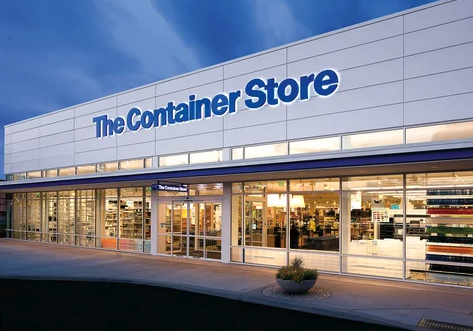
The Container Store sold to Bed, Bath & Beyond.
What does this mean for organizers? We’re talking about it!
You can listen right here by pressing play, or you can read the full transcript below!
LINKS FOR LISTENERS
Connect with Melissa and Pro Organizer Studio: CLICK HERE
If you are interested in our Inspired Organizer® program, you can find us at www.inspiredorganizer.com
We have a whole library of podcasts here, our YouTube channel, and you can find us on Facebook and Instagram at Pro Organizer Studio.
FULL TRANSCRIPT
Melissa Klug: We’ve never really had an emergency podcast before. Is that what this is? Are we doing an emergency podcast?
Cabri Caldwell: I’m calling it just current events. Like, just breaking—
Melissa Klug: News.
Cabri Caldwell: Breaking news. Yeah, breaking news feels good.
Melissa Klug: Breaking news in the organizing world. In the last, I don’t know, probably a couple of years… a year… I don’t know. The passage of time is confusing to me. But every time I go in The Container Store—and I have said this, I’ve said these words out loud to people before—it feels like Bed Bath & Beyond now.
Because they’re starting to be like… we had bins, and then it started to be like, “Oh, we’ve got this end cap of ChapStick holders and PopSockets,” and all… it just started feeling real dime-store-y.
But the only way I could describe it was Bed Bath & Beyond. That’s what it felt like to me. And now guess what? Guess who just bought The Container Store?
Cabri Caldwell: Bed Bath & Beyond. Correct.
Melissa Klug: Anyway, I guess I don’t know if I had a crystal ball or if I was just complaining and it turned into something. I don’t know. I had nothing to do with it, obviously.
But we wanted to come on and just talk about a few things related to this because I do think there are going to be impacts to organizers that we should know about.
What was your initial thought when you heard about this?
Cabri Caldwell: Someone had actually posted about it in our Inspired Organizer® Facebook group. I’m still kind of in the middle of my social media fast, so I had very limited time and totally missed it.
Someone had posted about it, and I was like, “Oh, very curious.” But I don’t know… my first initial gut feeling of just collaboratively how they’re buying each other out and it’s all going to be one brand, and it will be rebranded as The Container Store / Bed Bath & Beyond… it just feels messy.
And I say that as if you are someone who works at The Container Store that would like to come on the podcast and talk about it, we would love that. But… yeah. It just feels, at first glance—it’s very new information—it feels a little messy.
Melissa Klug: And let’s just go through a little bit of the history too, because we did have some people saying, “Wait a minute, I thought Bed Bath & Beyond was bankrupt,” and “The Container Store is bankrupt, so how are two bankrupt companies buying each other?” All that kind of stuff.
So, give us the two-second synopsis of all the things.
Cabri Caldwell: Yes. So it all started technically in November of 2024. There is the parent company, Beyond, and Beyond is actually the one that came in to quote-unquote rescue—
Melissa Klug: Yes. And Beyond. Yes.
Cabri Caldwell: And then early 2025, Beyond also came in to rescue The Container Store. So in a 12-month period, they came in to buy these two bankrupt companies technically.
Do you want to explain how that works?
Melissa Klug: So I don’t pretend to know all the things, but the biggest thing that I think is important for people to know is that Bed Bath & Beyond declared bankruptcy—I don’t have it right in front of me—but it was like the end of 2023, if I recall correctly.
Cabri Caldwell: Yes.
Melissa Klug: And part of their bankruptcy was they had to close all of their retail stores, which they did. Bed Bath & Beyond used to be on every single corner. I have no idea how many stores they had, but they were everywhere. And they were huge footprints too.
So they closed all their retail stores. Now, a key part of the story is that they sold their intellectual property—meaning their name, their brand, the blue color, all that kind of stuff. That got sold for $21 million to Overstock.com. Overstock.com also used to be huge in the online retail space.
They bought that intellectual property. So when you hear the name Bed Bath & Beyond, immediately you’re like, “Wait a minute, they went out of business.” It’s really an intellectual property brand-name play.
So I just want people to think about that too. But what they’re doing now is that Beyond Inc. is coming in and they are actually going to have all these assets. So they’re combining The Container Store—which, as you said, is going to have a very long name now. It’s going to be The Container Store and Bed Bath & Beyond. I already don’t like that.
And then they also have Kirkland’s, which is… I don’t know. Kirkland’s is national, right? We have it here. You have it there. It’s everywhere, I think.
Cabri Caldwell: Yeah, I think so.
Melissa Klug: But Kirkland’s is a home store—more like home décor, that type of stuff. And they are also coming in to be a part of this.
So when I read all the stuff about it, the main thing that sounded to me—they kept talking about how Bed Bath & Beyond was very excited to get their hands on Elfa. So when I read it, I go, Elfa is the play here.
Cabri Caldwell: Yes.
Melissa Klug: They want the closets. Because previously Elfa, which is a Swedish company, was only in The Container Store. That was the only place you could buy it, period, the end.
So what it sounded like to me is that is what they’re going to really concentrate on.
Cabri Caldwell: So when I found out, when I was reading the article initially, there was a lot of commentary around Elfa. In my head, if I were to put myself in the CEO’s shoes, it felt like, “We want to be a competitor in the IKEA space.”
But it’s still very different than what The Container Store traditionally serves, who they serve, how they operate, the type of products that they offer.
And it’s kind of interesting to think about it from that standpoint, because you could see a lot of shifts and changes in the next little bit, which then ties into the next part.
So the CEO released this statement—and I’m reading it from my phone—about how they want to create an “everything home ecosystem,” quote-unquote.
They plan to fill the stores with a mix of kitchen, bed, bath, organizational products, effectively turning them into a physical location with a new footprint that still honors the Bed Bath & Beyond brand. You’ll start seeing more than just bins and closets. The stores will incorporate cabinetry, flooring, and lighting to act as a “home services hub.”
That to me was like… boo. It’s a lot. A lot.
Melissa Klug: So now it’s, okay, we got your egg timer over here, we’ve got all your tchotchkes, also would you like a new floor? How do you feel about some new lighting? How about a new closet? It’s a lot of stuff.
Cabri Caldwell: There’s a lot of stuff. So part of me, as I’m learning all of these things and trying to figure out what the long-term play is here for the brand and how that affects organizers—because our organizers already have questions. They already want answers.
I think it’s going to be one of those things where we might need organizers that have warehouses, or we might have to get a little bit more creative on where we’re shopping from. I just don’t know, longevity-wise, if The Container Store will be the go-to for all of the products that they always have been.
Melissa Klug: And it’s interesting to me to think about because at How To Summit, the CEO of The Container Store came, and he was great, by the way. He was very upfront. I thought he was very candid about some of the challenges they were facing. He was like the most upfront CEO that I have ever heard from in person.
But it really did feel like organizers really rely—organizers who are lucky enough to have a Container Store, I should say, because I recognize there are a lot of people listening to this who are like, “I don’t have a Container Store within four hours of me. I don’t care about this.”
But the important thing that I think all of us have to be paying attention to is that The Container Store does have a level of products that some of our clients really rely on. And I mean from an aesthetic standpoint, from a variety standpoint, from a price point standpoint, there are a lot of parts of The Container Store that are important to organizers.
What I do not know is how much of The Container Store revenue is from organizers versus from the public. And what are they going to change in terms of the kind of things that we will have access to?
And I do think that if you have a business that relies on really high-end products, that type of thing, I think you’re going to have to be making some backup plans. That’s just a complete supposition on my end.
Cabri Caldwell: And I think that’s a safe assumption. And also, if that’s not the case and it just is a planted seed in your mind to work on in the future, you’re going to be better off if you find other retailers or other manufacturers that can offer the same quality or a higher-quality product that those specific clients want and expect.
Melissa Klug: Yeah, I just think it’s another sign that you should always have a backup plan. And I know sometimes you’re just like, “La la la, I’ve got this great thing in front of me.” Things change fast.
So figuring out what your backup plan is and finding things—whether it is on Amazon, at Target, at Walmart, at some of the other places that people end up finding things. IKEA is really doing a great job on the storage front and organizational supplies front. But again, not everybody has an IKEA near them either. So yeah, that’s another one that can be fairly niche depending on where you are.
Cabri Caldwell: I feel like we have been incredibly lucky to flex and learn how to use that resilience muscle when it comes to products because we have a Container Store five hours away, IKEA five hours away. We’re limited to two Targets, we’ve got some Walmarts, or I can order on Amazon.
But for us and our company, those are the options. So it’s not going to affect us as much. But the people who start in the morning, go buy product at lunch, and install that afternoon—there’s probably going to be shifts, unfortunately.
Melissa Klug: I know organizers who spend six figures at The Container Store in a given year.
Melissa Klug: And those people do exist. I do have a Container Store where I am, and I exclusively did Elfa for clients. I love Elfa. I have designed tons of them. I have them in almost every room of my own house. And I am a little concerned about what that means.
Like, you know what? By the way, I may, a year from now, be like, “I’m eating all my words. They really have done an amazing job and they’ve expanded it out.”
And by the way, one of the things that I’ve been running into in the last year or so, because of the bankruptcy and everything else, is stocking has been like—you can’t get regular drawers. You can’t get some of the real basic Elfa pieces. They have been problematic to keep in stock. So it’s very possible that we might be sitting here going, “This has been great, because now we have everything in stock.” We just don’t know yet.
Cabri Caldwell: I agree. It could be neutral, it could be positive, it could be negative.
Melissa Klug: Yeah.
Cabri Caldwell: Very open-minded.
Melissa Klug: As you just said, your closest Container Store is five hours away. Maybe under Bed Bath & Beyond, you have a Bed Bath & Beyond in your backyard. Who knows?
But I think that the overall point is, in the current 2026 landscape, a lot of things are changing. A lot of businesses are changing. Our businesses are changing. And so being ready to flex and say, “Okay, I have always gotten X, Y, Z here. I need to have three backups, and I need to know what my options are.”
And like you said, so you guys have a warehouse, right? Yes. Yes. Is that something that you—when did you come to that in your business, I should ask?
Cabri Caldwell: Ooh. When—
Melissa Klug: When did you guys do that?
Cabri Caldwell: So we were actually in an office space in 2023. Okay. And when I say office space, I mean like a closet. It was outrageous, and I am so impressed that we even had two whole tables that fit in that little space. But basically, it was just a shelf that held a little bit here and there. Okay.
But we just started acquiring more, and we needed more. Post-COVID changed things because we had so many supply chain issues that affected way into, I would even say, through 2022.
Yeah. But then last year, and even late in 2024, then we were having the whole tariff conversation, which again, different pieces—but how it affects us is we literally couldn’t get our hands on stuff because the manufacturers didn’t want to pay the tariffs to get them to the United States.
And we ran into those issues as well, to where it’s, okay, we have this favorite product that we love to use, and now we can’t get our hands on it. What do we do?
And I don’t know. I love having a warehouse, and I think my team does too, but it’s not necessary necessarily. But on the flip side, I’m not ordering $50,000 worth of Container Store stuff to store either. I don’t know.
Melissa Klug: So where do you mostly get your—are you mostly an—
Cabri Caldwell: Amazon. Target. Those are my two. And our Targets, because we are a college town, they flex heavily around move-in, move-out season. And so it’s very hard for us even to get those standard items that they should carry. It’s hard for us to get our hands on them, and so I just order directly from Target and we keep a back stock.
And so it’s not crazy. I would say we keep, I don’t know, $5,000 worth of stock. So it’s not a ton in the grand scheme of things, but it’s just enough that we don’t catch ourselves in a bind.
Melissa Klug: You’re not empty.
Cabri Caldwell: Yes.
Melissa Klug: Yeah.
Cabri Caldwell: But the other part too is this is a me thing. If we have a project that we need to order something very niche, very specific, very random—like it was headband holders the other day—I am not the type of person that’s like, “Oh my God, we can’t finish the project.”
I’m like, “No, we’re done. We’re done with the project. I’m happy to send you your invoice next week when your headband holders get delivered. I’m gonna drop them by, and you can either let me in and I’ll come install them, or I will leave them on your front door. This is exactly where they go.”
And so for me, it’s not a big deal. That’s just how we choose to operate. For some people, that would send them into a complete tailspin. Yes.
Melissa Klug: And—
Cabri Caldwell: I recognize that.
Melissa Klug: I’m also not a tailspin person. I’m like, “It’ll come when it comes.” And same thing, I will happily come and do this for you, or I will get it to your house. Yep. Yeah. So don’t get too spun up.
I do think Target’s a good example. Target has really upped their game in the last couple years, big time. And I know Walmart went through their thing with Home Edit, and I think they’re done with Home Edit, right?
Cabri Caldwell: I think so.
Melissa Klug: Yeah. I don’t think they’re doing Home Edit anymore, but anyway, Target—again, even if you don’t have a Target super close to you, their shipping is fantastic. And I have found that they have done just a really outstanding job with especially good acrylic bins, lots of different sizes, stackable—they really have done a spectacular job with that Brightroom line. And if you have been sleeping on Target, you shouldn’t.
Cabri Caldwell: Yes. And I think it was needed, especially for people like me who don’t have access to a Container Store. They basically brought in options for both acrylic, some of the everything trays, the multipurpose bins. Those were things I never had access to that basically showed up overnight in store, that we can get any day of the week now.
Melissa Klug: Yeah. I’ll also say, because I was having this conversation earlier with someone else, and this is in no way a political conversation. This is not—we’re not veering into any of the subjects that… no religion, no sex, no politics.
But I will say, all of these different companies have gone through some things where you might not agree with their messaging or their leadership, or you might be like, “Man, I really don’t love supporting people that could be problematic in certain ways.”
The unfortunate thing I was discussing with my friend about this is there are, for our job and for what we need to do to keep clients happy, a finite amount of resources that we have to bring to bear. And the unfortunate thing is you might have to say, “Yeah, I don’t love supporting Amazon because they bring a lot to the table that some people might not feel great about, but also we need to make our clients happy. That’s our job.”
Cabri Caldwell: No company is ever going to be perfect.
Melissa Klug: No.
Cabri Caldwell: There’s some people who frown upon importing stuff overseas because you’re taking away from jobs locally or in our country. And I’m like, you’re going to lose with each scenario. You just have to pick the one that you’re comfortable with.
Melissa Klug: You just—and everybody has to do what works within their own ethical, moral compasses. Yeah. But that’s one thing that I have had to settle in myself of, you know what, sometimes Amazon is the most effective way to get my client’s problem solved, and yep, so that’s what I’m gonna do.
One of the things that this conversation brings up is not really about where am I gonna get my stuff, but it’s really a bigger conversation about—there’s a woman years ago, a KonMari woman, who had this great phrase that I loved. I think I’ve said it before on the podcast, but she said, “Rigidity does not spark joy for me.”
It was someone that wanted a whole set of rules about stuff, and rigidity doesn’t spark joy. And I think about that a lot because I do think what you said earlier about, okay, we’re not going to halt the project because we don’t have a headband holder. We are going to flex.
And so I think that is part of the conversation too, is you might have to set different expectations with your clients. And we just had a whole podcast about expectations.
Cabri Caldwell: I think that’s just a good lesson in general, especially when you’re working with disorganized people, as we do. I would love to say that every project follows the plan and you have all of your product ordered, but it doesn’t. They change their mind, they decide that they wanna work on their kitchen instead of their garage, and then you have an order that gets delayed or lost. Thank you, UPS. I’m gonna talk some crap on them because it’s a real freaking thing that happens.
But I just think being adaptable, having a little bit of flexibility, I think it goes a long way. And I think it also creates trust in your clients when you’re like, “Hey, this is not how it was supposed to go, but we’re gonna make do, we’re gonna fix it, we’re gonna move on.”
If you’re talking to someone who’s already high anxiety, high chaos, high disorganization, you’re gonna give them a little bit of peace that things aren’t going exactly to plan.
Melissa Klug: Yeah. I think too, it’s a reminder that you may have to think about your processes and say, “We have always done it this way. This is the way that we do things. We measure ahead of time, we buy product ahead of time, we have all the product ready, we install the product.”
You might have to start flexing a little bit and saying, “Hey, we are going to do decluttering and downsizing this day. We are going to do product a different day.” You may have to start changing how you structure your business. And being prepared for that, I think is important too.
Cabri Caldwell: Yeah.
Melissa Klug: And it can be that you reschedule a second day.
Cabri Caldwell: I have always been a fan of phase one decluttering. Yeah. Give it a couple days so that they can recover mentally and emotionally, and then come in and do the fun stuff. But that’s not for everyone. Totally understand.
But I don’t know. We literally might come back a year from now and be like, “Hey, nothing bad happened. Everything’s great. This merger, everybody has all the products they need. They’re opening more stores in smaller markets.” It may be the best thing ever. We don’t know. We’re just going with current event info that has been released publicly.
Melissa Klug: I’ll just tell you, in my own personal corporate experience in my life, I worked for a company who, within the course of two years, we were four different companies. We got bought and sold multiple times.
And what I will say is, and we were not a retail company, a very different industry, but I will tell you that with any sort of merger, buyout, acquisition, anything that changes the structure of a company—when you’re changing names, when you’re bringing people together, when you’re doing all the things—there will be some chaos.
And I think a lot of people have not been super happy with the Container Store for a while, for organizers specifically, for a variety of reasons. Like a week ago, someone came into Inspired Organizer and said, by the way, if you don’t have your receipt at Container Store, your life is over. Like they went backwards in terms of their computer capabilities.
And so we have all had very legitimate complaints about how they operate. Guess what? That might get worse for a short period of time. It might get better, but it’s probably not gonna get better in the short term. So I think just being prepared for some of that kind of stuff too, and for there to be some confusion within the store, all that kind of stuff—I think that is going to be pretty standard.
Cabri Caldwell: You know, that one Facebook post saved, I would say, at least 10 people the heartache of money going back on the wrong card or going to a different client’s card because they just expected it to be smooth and easy like it typically is.
Melissa Klug: For sure.
Cabri Caldwell: And then it very much so wasn’t. And so I’m really glad that post—even again, not something I see very often because we don’t have a Container Store—but it saved a lot of heartache just having that community.
Melissa Klug: For those of us who do use Container Store, this was—you could just go in and you put in your phone number and it just got to the right account. And there was some sort of a glitch that caused it. We had someone who said, “Oh yeah, we had money that went to a completely wrong card.” It might have been a customer card.
You have some of those kind of things. Container Store has been very upfront that they’ve had some computer system issues, and I think you should just be prepared for some of that stuff to be around.
Cabri Caldwell: Yeah. Yeah.
Melissa Klug: The only constant in the world is change. And I feel like we should feel pretty fortunate that Container Store could have just shut down all their stores.
Cabri Caldwell: There’s that.
Melissa Klug: It could have been a very feasible event for them to say, “We’re shutting it all down.” That didn’t happen. And so we’ll just have to wait and see.
Cabri Caldwell: Yeah, it’ll be exciting. It’ll be exciting to see how it plays out.
Melissa Klug: Hey, organizers! I just wanted to drop this part of the podcast. I’m going to drop another one tomorrow. Cabri and I actually talked for a while longer, but I decided I was going to do the Container Store podcast by itself, and then tomorrow we’ll talk about other just random current events. So, three pods in the course of five days. I’m trying to deliver for you guys. I hope you have a good day. Talk to you soon.
CONNECT WITH PRO ORGANIZER STUDIO
We’d love to work with you. Send us an email (Melissa answers them personally!) or connect with us HERE…or check out our programs HERE.
If you’d like to watch our FREE seminar, The Pro Organizer’s Profit Plan—check it out here!